
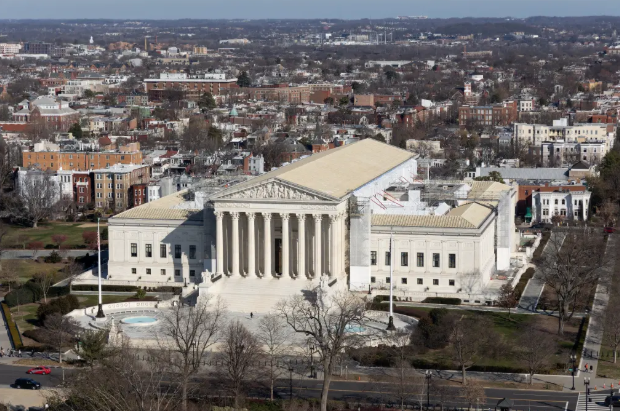
Supreme Court Strikes Down Trump Birthright Citizenship Order in Major Defeat for Administration
The Supreme Court ruled Tuesday against President Donald Trump‘s executive order seeking to end birthright citizenship for children born in the United States to illegal immigrants and foreign visitors, dealing a major blow to one of his signature immigration policies.
Trump signed the order on his first day back in office, arguing that the 14th Amendment does not guarantee automatic citizenship to children born to parents who are in the country illegally or temporarily.
In a 5-4 decision, the court ruled that the Constitution’s Citizenship Clause protects nearly all children born on American soil regardless of their parents’ immigration status.
Chief Justice John Roberts wrote for the majority that the text of the 14th Amendment makes no distinction based on whether a child’s parents are citizens, legal residents, temporary visitors or in the country unlawfully.
“If Congress intended to limit American citizenship to the children of those domiciled in the United States, nothing in the succinct language of the Citizenship Clause conveyed that design,” Roberts wrote.
Joining Roberts in the majority were Justices Amy Coney Barrett, Sonia Sotomayor, Elena Kagan and Ketanji Brown Jackson.
Justices Samuel Alito, Clarence Thomas and Neil Gorsuch dissented. Justice Brett Kavanaugh agreed the executive order conflicted with existing law but argued Congress should determine any future changes to birthright citizenship rules.
The ruling leaves in place the Supreme Court’s 1898 decision in United States v. Wong Kim Ark, which established that nearly all people born in the United States automatically receive citizenship.
The Trump administration argued that the earlier case involved legal immigrants rather than illegal immigrants and therefore should not control the outcome of the current dispute.
Roberts rejected that distinction, writing that the historical record surrounding the ratification of the 14th Amendment contained no evidence that citizenship protections depended on the immigration status of parents.
The lawsuit was brought by families who argued the order unlawfully stripped their children of citizenship rights and access to federal benefits.
The decision effectively ends the administration’s effort to restrict birthright citizenship through executive action, meaning any future change would likely require congressional action or a constitutional amendment.