
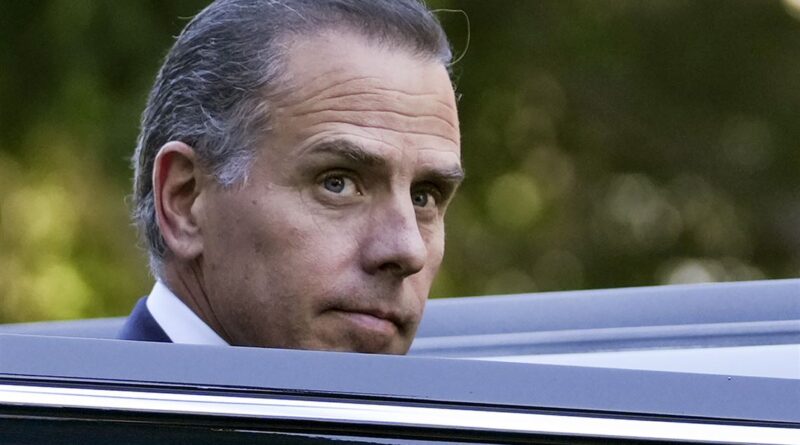
Supreme Court Weakens Law Used To Convict Hunter Biden On Gun Charges
The Supreme Court unanimously ruled Thursday that the prosecution of a Texas man for purchasing a firearm while using marijuana violated his Second Amendment rights, delivering a significant blow to a federal law that was also used to convict former first son Hunter Biden on gun charges.
In a decision written by Justice Neil Gorsuch, the court sided with Texas resident Ali Danial Hemani, concluding that the government failed to demonstrate that historical precedent supported barring him from possessing a firearm because of his marijuana use.
“We appreciate that drugs and guns can sometimes make for a dangerous mix,” Gorsuch wrote in the majority opinion. However, he added that the government “cannot carry the burden it has set for itself” and that courts must decide cases based on historical evidence.
The justices did not strike down the federal statute entirely. Instead, the ruling narrowly focused on Hemani’s case and left unresolved broader questions about whether people who are currently intoxicated or suffering from addiction can legally be prohibited from possessing firearms.
The decision nonetheless weakens a federal law that has been used in several high-profile prosecutions, including the case against Hunter Biden. The younger Biden was convicted of purchasing a firearm while addicted to cocaine, though he later received a presidential pardon from his father, former President Joe Biden.
Gorsuch criticized prosecutors for failing to analyze whether Hemani’s marijuana use actually made him dangerous or incapable of responsibly carrying a firearm. He argued that historical laws concerning habitual drunkenness differed substantially from the modern federal statute at issue.
Several justices wrote separate concurring opinions. Justice Clarence Thomas and Justice Samuel Alito each penned their own opinions, with Alito’s concurrence joined by liberal Justice Elena Kagan. Justice Ketanji Brown Jackson also authored a concurrence that was joined by Justice Sonia Sotomayor.
The unanimous ruling is expected to fuel continued legal challenges to federal gun restrictions following the Supreme Court’s recent expansion of Second Amendment protections. It also raises fresh questions about how courts will treat firearm prohibitions involving drug use, particularly as marijuana legalization continues to spread across the country.