
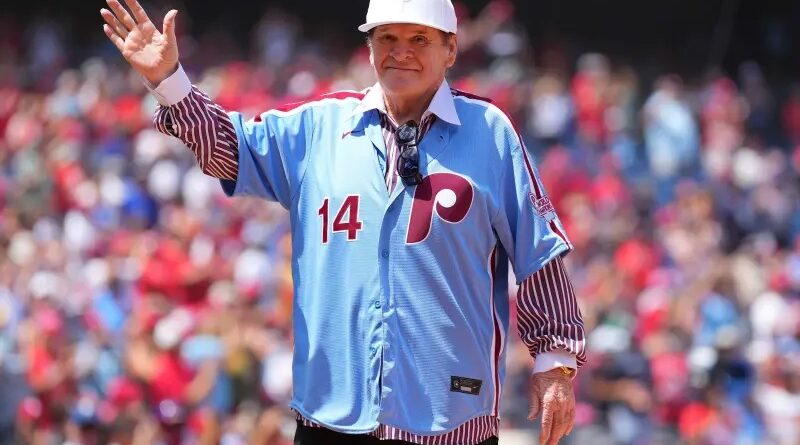
Trump Grants Posthumous Pardon to Baseball Legend Pete Rose, Renews Push for Hall of Fame Induction
President Donald Trump has granted a posthumous pardon to baseball legend Pete Rose, the all-time Major League Baseball hits leader who spent decades fighting for recognition in the Baseball Hall of Fame.
Trump announced the decision Thursday on Truth Social, praising Rose’s extraordinary career and criticizing Major League Baseball for keeping him out of Cooperstown.
The president described Rose as a baseball superstar and legend whose record of 4,256 career hits remains unmatched. He also highlighted the former Cincinnati Reds star’s numerous accomplishments during his 24-year playing career.
Rose, who died in September 2024 at age 83, pleaded guilty to two felony counts of filing false federal income tax returns in 1990. Prosecutors determined that he had failed to report approximately $355,000 in income over four years.
The baseball icon served five months in federal prison, paid a $50,000 fine, and completed 1,000 hours of community service.
His legal troubles were separate from the gambling controversy that resulted in his lifetime ban from Major League Baseball in 1989.
An MLB investigation concluded that Rose had wagered on baseball games, including contests involving the Cincinnati Reds while he was managing the team. Rose denied the allegations for years before acknowledging his gambling activities in 2004.
Despite the controversy, Rose’s accomplishments remain among the most impressive in baseball history. He was a 17-time All-Star, three-time World Series champion, three-time National League batting champion, and the National League’s Most Valuable Player in 1973.
Trump has repeatedly argued that Rose deserved recognition for his achievements and should not have been permanently excluded from the Hall of Fame.
In May 2025, MLB Commissioner Rob Manfred removed Rose and 16 other deceased individuals from baseball’s permanently ineligible list, clearing the way for possible Hall of Fame consideration.
The decision followed years of appeals and discussions about whether Rose’s gambling violations should outweigh his accomplishments on the field.
Rose could now be selected for induction as early as 2028, with a Hall of Fame committee expected to consider his candidacy in December 2027.
Trump’s presidential pardon addresses Rose’s federal criminal convictions but does not automatically secure his induction into the Hall of Fame, which operates independently of the federal government.
The president also renewed his criticism of the treatment of former pitcher Roger Clemens, another accomplished player who remains outside the Hall of Fame.
For Trump, the pardon represents another step in his longstanding campaign to restore Rose’s reputation and recognize one of baseball’s most celebrated players.
Although Rose did not live to see the pardon or his reinstatement, the developments have reopened the possibility that baseball’s all-time hits leader will eventually receive the sport’s highest honor.