
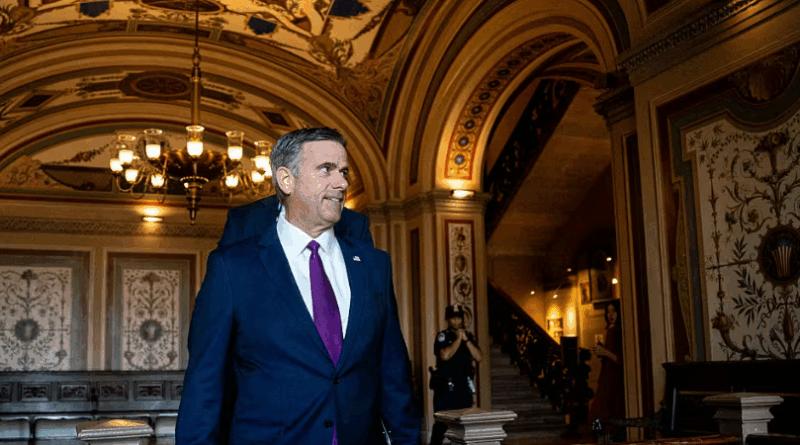
Trump Plays Coy Over CIA Director John Ratcliffe’s Mysterious Trip to Moscow
President Donald Trump is downplaying speculation surrounding CIA Director John Ratcliffe’s surprise trip to Moscow, insisting the unusual visit was not intended to warn Russian President Vladimir Putin against testing NATO or launching a new confrontation with the West.
Ratcliffe traveled to the Russian capital Tuesday for previously undisclosed meetings with Russian intelligence officials. The rare visit immediately sparked questions about why one of Trump’s most trusted national security officials had personally traveled to Moscow at a particularly tense moment in relations between the two countries.
During an interview with Glenn Beck, Trump was asked whether Ratcliffe had been sent to warn Putin against challenging NATO or to discuss Russia’s relationship with Iran as Washington intensifies economic pressure on Tehran. Trump rejected both theories, describing the CIA director’s mission as “semi-routine.”
Trump instead suggested the discussions were connected, at least in part, to his administration’s continuing effort to end the Russia-Ukraine war. The president said both Russia and Ukraine now want the fighting to stop and reiterated his belief that the conflict would never have begun had he been president when Russia launched its invasion.
The Kremlin confirmed that Ratcliffe held discussions with Russian intelligence officials but said he did not meet personally with Putin. Kremlin spokesman Dmitry Peskov declined to reveal what was discussed, although he acknowledged that Putin was quickly briefed on the outcome of the meetings.
Ratcliffe’s visit attracted particular attention because it was the first known trip to Russia by a CIA director since William Burns traveled to Moscow in November 2021. Burns made that journey as American intelligence agencies warned that Russia was preparing to invade Ukraine, which Moscow ultimately did several months later.
That history fueled speculation that Ratcliffe might similarly have been carrying a serious warning from Washington. Recent American intelligence assessments have reportedly raised concerns that Putin could become increasingly willing to authorize provocative actions against NATO countries, including operations designed to test the alliance without triggering a full-scale military confrontation.
Another theory centered on Iran. Russia maintains close relations with Tehran, while the Trump administration has launched an aggressive economic campaign intended to isolate Iran and pressure its leadership into reaching a deal with Washington. Ratcliffe has also played an important role in American intelligence operations connected to the Iran conflict.
Trump, however, dismissed the suggestion that Iran sanctions were the purpose of the Moscow mission. While refusing to provide detailed information about what Ratcliffe discussed, the president left open the possibility that something significant could ultimately emerge from the conversations.
The secrecy surrounding the trip only intensified interest. Ratcliffe traveled aboard a U.S. military aircraft, and Washington reportedly informed Ukraine beforehand that a senior American delegation would be visiting Moscow and asked Kyiv to temporarily limit strikes while the delegation was in Russia.
Ratcliffe has maintained contacts with Russian intelligence counterparts during his tenure and has previously been involved in sensitive negotiations, including prisoner exchanges. Intelligence agencies frequently maintain communication channels even when diplomatic relations between their governments are severely strained.
Trump praised Ratcliffe as a trusted member of his administration while making clear that he did not intend to publicly reveal the substance of the discussions. His comments portrayed the visit as less dramatic than some of the theories circulating after Ratcliffe’s presence in Moscow became public.
For now, neither Washington nor Moscow has disclosed exactly what was discussed behind closed doors. But with the Ukraine war continuing, concerns about Russian activity around NATO and Moscow’s relationship with Iran all creating pressure between the two powers, Ratcliffe’s unusual trip has ensured that speculation over the true purpose of the meeting is unlikely to disappear quickly.