
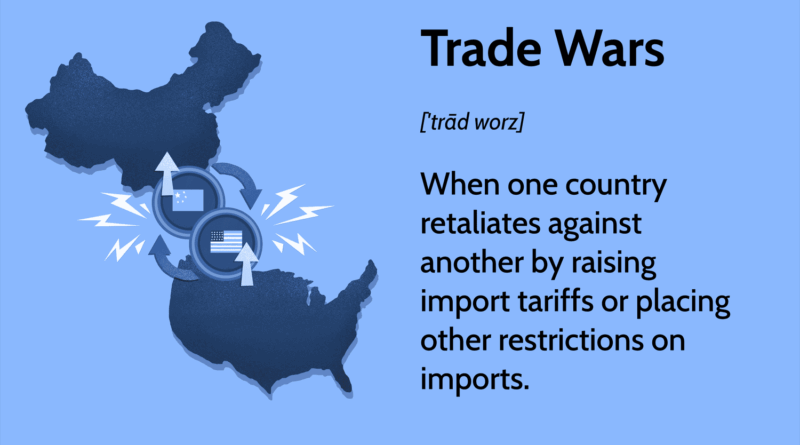
Uncertainty Looms as U.S.-China Tariff Deadline Nears
The current 90-day hiatus on increased tariffs against China is slated to culminate this Tuesday, casting an air of uncertainty about its potential extension. Late last month’s China-U.S. trade talks saw Chinese and U.S. authorities speculating a further 90-day extension. However, the ultimate decision hangs in the balance, subject to President Donald Trump’s whims. Up to this moment, there has been no official communication if he supports an extension or plans to proceed with the escalated tariffs.
This indecisiveness puts enterprises in a complex position and a decision to elevate import taxations could have a significant impact on the global markets. Throughout the negotiations, Trump has frequently adjusted deadlines and tariff percentages, and both sides remain tight-lipped about their plans for the upcoming Tuesday. A postponement of the deadline for reaching a trade resolution with China would deter prior threats of tariffs soaring up to an unprecedented 245%.
The motive behind escalated tariffs is to counterbalance the enormous, persistent U.S. trade shortfall with China, which plummeted to a 21-year trough in July, evidently affected by the looming tariff threat on Chinese exports. It is typical for the U.S. to provide previews of negotiation progress, yet it is infrequent for China to make any premature announcements until substantial decisions are taken. So far, China has been tight-lipped leading up to the Tuesday cut-off.
In a conversation, U.S. Vice President JD Vance shared that President Trump was contemplating imposing additional tariffs on Beijing, fueled by China’s acquisition of Russian oil. Yet he stated that Trump is still indecisive. Skyrocketing tariffs on Chinese exports to America would heap enormous strain on Beijing amid a period of economic recovery following a prolonged slump in its housing sector.
China, the world’s second-largest economy, is grappling with the aftereffects of the COVID-19 pandemic that have forced numerous individuals to rely on intermittent work, constricting the employment market. The surge in import taxes on small Chinese parcels has negatively affected smaller manufacturing units and expedited layoffs. However, the U.S. heavily depends on the importation of a wide array of goods from China, ranging from everyday household objects and clothes to wind turbines, basic semiconductors, electric vehicle batteries, and required rare earth elements.
Such dependency hands Beijing significant influence over the ongoing discussions with Washington. Even with hefty tariffs, China maintains its competitive edge for many goods. The Chinese authorities have noted that the U.S. economy is just commencing to experience the fallout from elevated prices due to tariff increases.
As of the present, importations from China are confronted with a standard 10% tariff with an additional 20% supplemental tariff related to fentanyl issues, with select products being taxed more. Chinese imports entering the United States are subject to approximately 30% tariffs. Prior to declaring a ceasefire, Trump had cautioned that he would enforce a dramatic 245% import tax on Chinese merchandise.
In response, China threatened to amplify its tariff on U.S.-originated goods to an astronomical 125%. A trade conflict between the global giants has profound implications, transforming industrial supply chains, adjusting the demand for commodities like oil and copper, and influencing geopolitical matters, including the war in Ukraine.
Following a call with Chinese leader Xi Jinping, President Trump expressed hope for a face-to-face meeting later this year, inducing further drive for attaining a resolution with Beijing. Should the parties fail to maintain their mutual truce, trade discord could intensify and tariffs could potentially scale to even higher values, resulting in considerable damage to both economies and causing fluctuations in global markets.
The precarious situation would likely make businesses hold off investment and hiring efforts, generating an unprecedented surge in inflation. In the face of a dynamic and volatile trading climate, market participants, policymakers, and consumers alike are keenly watching Washington’s next move with baited breath as geopolitical and economic stakes continue to rise.
The complexity and implications of such decisions are significant, impacting not just the economies of the United States and China, but resonating across the globe. The ripple effects are far-reaching, affecting domestic production, consumer prices, and employment prospects in numerous sectors. Therefore, the economic implications of the looming deadline do not exist in isolation but are interwoven within the global economic fabric.
As we stand on the precipice of potential major changes in global trade policies, the focus is on maintaining open channels of communication, finding common points of interest, and establishing a framework that ensures fair trade. With a fragile truce in place, the path forward remains unclear, with both nations grappling with strategic national interests while skirting the risk of economic fallout.