
US Launches Third Straight Night Of Airstrikes Against Iran
The United States carried out a third consecutive night of military strikes against Iran after President Trump ordered additional attacks aimed at weakening Tehran’s military capabilities and protecting international shipping through the Strait of Hormuz.
U.S. Central Command said the latest operation targeted Iranian military infrastructure, including air-defense systems, radar installations, missile launch sites, drone facilities, and naval assets. Explosions were reported in Bandar Abbas, Bushehr, Kish Island, and Qeshm Island, all strategically important locations near the Strait of Hormuz.
The latest wave of strikes follows renewed hostilities after President Trump declared that Iran had violated a proposed peace agreement. Trump said the United States would continue imposing “heavy costs” on the Iranian regime until it stops threatening commercial shipping and regional stability.
President Trump also announced that the United States would maintain a leading security role in the Strait of Hormuz, describing America as the “guardian angel” of the vital waterway. He argued that countries benefiting from the safe passage of oil and commercial goods should contribute financially to the cost of maintaining security.
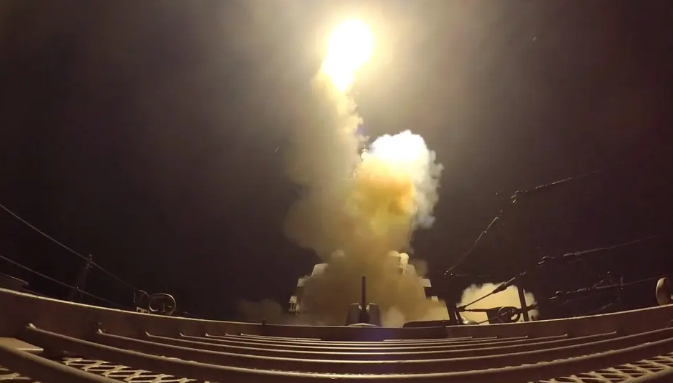
According to CENTCOM, the operation involved fighter aircraft, drones, naval forces, and precision-guided munitions designed to reduce Iran’s ability to carry out missile, drone, and maritime attacks. Military officials said the strikes were carefully planned to target military objectives while minimizing civilian casualties.
Iran claimed it responded by targeting U.S. military facilities in Bahrain and Kuwait and by launching attacks against shipping in the Persian Gulf. Iranian officials also asserted they had closed the Strait of Hormuz, though the United States rejected that claim and said freedom of navigation would continue to be enforced.
The escalating conflict has fueled new concerns about global energy markets, as roughly one-fifth of the world’s seaborne oil passes through the Strait of Hormuz. Oil prices rose following the latest exchanges as governments and businesses monitored the growing tensions in the region.
Despite the continued military action, President Trump said he remains open to a negotiated settlement if Iran agrees to halt attacks on international shipping and returns to the negotiating table.