
US Moves Last Pacific Aircraft Carrier to Middle East as Operation Epic Fury Strains Navy Resources
The United States is moving its last aircraft carrier based in the western Pacific toward the Middle East, temporarily leaving the region without a carrier as the Trump administration prioritizes the ongoing military campaign against Iran.
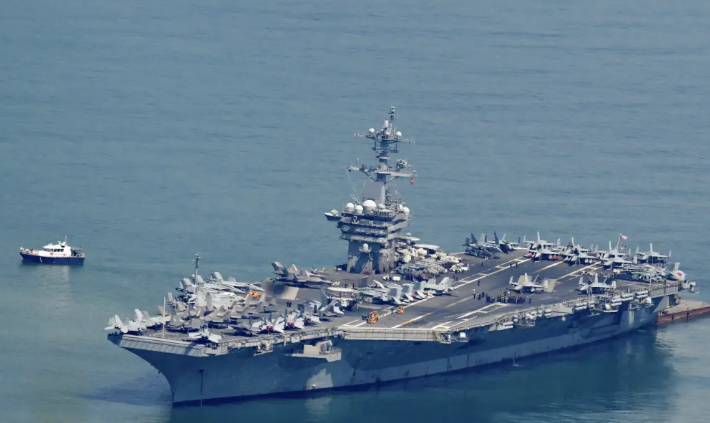
The USS George Washington is departing the Pacific and heading toward the Middle East, where it is expected to replace the USS Abraham Lincoln. The Lincoln has endured an extraordinarily long deployment while supporting Operation Epic Fury and the American campaign against Iran.
The George Washington had been operating from Japan as the Navy’s forward-deployed aircraft carrier in the region. Its departure means the western Pacific will temporarily lack an American carrier presence at a time when China continues expanding its military operations throughout the region.
The move demonstrates the enormous resources required to sustain the Iran operation. Operation Epic Fury began in February and has involved aircraft carriers, submarines, destroyers, bombers, fighter jets and other American military assets as the United States targets Iran’s military capabilities and maintains pressure on Tehran.
The Lincoln was originally expected to return home months ago, but its deployment was repeatedly extended because of the conflict. The carrier has now spent more than 200 consecutive days operating in a combat zone without a port visit, placing significant pressure on its sailors and equipment.
Reports about conditions aboard the Lincoln have recently drawn attention in Washington. Sailors and their families have raised concerns about food, supplies, sanitation and the psychological toll of the extended deployment, prompting lawmakers to demand answers from Pentagon leadership.
President Trump and Defense Secretary Pete Hegseth have pushed back against claims that the carrier is experiencing a broader crisis. Military leaders have nevertheless acknowledged the strain created by such a lengthy deployment, making the arrival of the George Washington increasingly important.
The decision creates a potential vulnerability in the Pacific, where the United States has traditionally maintained a powerful naval presence to deter China and reassure allies including Japan, South Korea and the Philippines. Beijing has continued expanding its own naval capabilities while increasing military activity around disputed areas of the region.
The carrier gap may ultimately prove temporary. The Navy could send another aircraft carrier into the Pacific within the coming months, but maintenance schedules and other deployments limit how quickly the service can move its massive warships around the world.
The George Washington’s reassignment underscores the difficult balancing act facing the Pentagon. The United States maintains military commitments across several regions, but even the world’s most powerful Navy has a limited number of aircraft carriers available at any given time because ships require extensive maintenance and crews need time between deployments.
For now, Iran is taking priority. Moving the George Washington out of the Pacific will allow the exhausted Abraham Lincoln and its crew to finally return home while ensuring President Trump maintains a major carrier presence supporting Operation Epic Fury in the Middle East.