
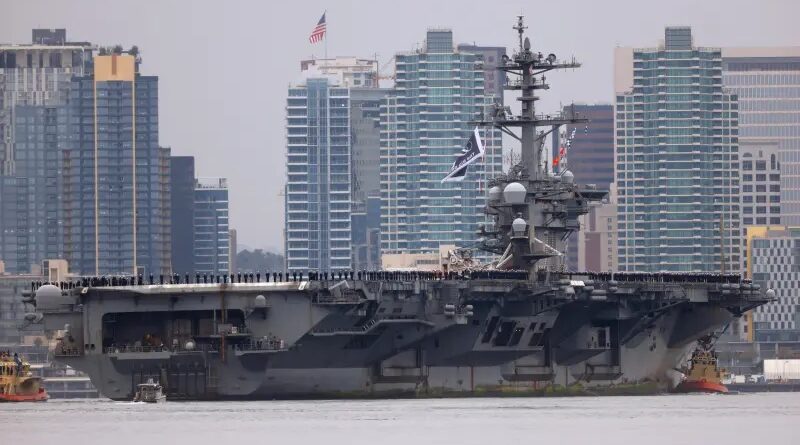
US Navy Making Major Changes for Next Carrier Deployment After USS Abraham Lincoln’s Grueling Mission
The US Navy is changing how it prepares aircraft carriers for extended deployments after sailors aboard the USS Abraham Lincoln endured severe supply shortages and deteriorating living conditions during its grueling mission overseas.
The USS Theodore Roosevelt is scheduled to leave San Diego later this month for a deployment expected to last seven to eight months. Navy leaders say they are applying lessons learned from the Abraham Lincoln by loading the Roosevelt with additional food, hygiene supplies and other essentials before it heads to sea.
Chief of Naval Operations Adm. Daryl Caudle said the carrier will maximize its supply of food, retail products and hygiene items. The Navy is also converting additional areas aboard the ship into storage space, allowing the carrier and its crew to remain self-sufficient for longer periods if normal resupply operations are disrupted.
The changes follow major logistical problems experienced aboard the Abraham Lincoln during its nearly nine-month deployment. The carrier originally departed San Diego in November for a scheduled seven-month mission in the South China Sea before being redirected to the Arabian Sea amid the conflict with Iran.
Conditions reportedly worsened after an Iranian attack disrupted operations at a US Navy base in Bahrain that served as an important regional supply hub. Sailors aboard the Lincoln faced shortages of basic necessities, including food and toiletries, as normal resupply operations became increasingly difficult.
Crew members and their families also raised concerns about conditions aboard the carrier, including mold in showers, broken toilets and inconsistent access to hot water. Food options reportedly became extremely limited at points during the deployment as the ship remained at sea for months without a normal port visit.
The Lincoln spent more than 280 days deployed and went more than eight months without a declared port visit before arriving in Thailand in early September. Roughly 5,000 sailors and Marines were aboard the carrier during the extended mission.
Beyond additional supplies, Navy officials say the Theodore Roosevelt will receive improvements intended to help sailors cope with another potentially lengthy deployment. Plans include better fitness and entertainment equipment as well as improved communications that will make it easier for crew members to remain connected with their families.
Navy leaders have acknowledged that extended deployments can put significant strain on sailors, equipment and supply chains. Preparing carriers to operate independently for longer stretches has become increasingly important as US forces continue operating in areas where traditional logistics networks could be disrupted.
The Theodore Roosevelt’s upcoming deployment will provide an early test of those changes. Navy officials are hoping that increased supplies, additional storage and improved quality-of-life measures will prevent its crew from experiencing the same hardships endured aboard the Abraham Lincoln.