
US Shoots Down Iranian Drones Near Strait Of Hormuz As Tensions Continue Despite Cease-Fire
The U.S. military shot down four Iranian attack drones Friday evening after they were launched toward the Strait of Hormuz, according to U.S. Central Command, marking the latest escalation in ongoing tensions between Washington and Tehran.
“Moments ago, CENTCOM forces shot down four Iranian one-way attack drones that were launched toward the Strait of Hormuz,” the military command said in a statement. “The attack drones posed an immediate threat to regional maritime traffic.”
The incident came hours after President Trump told an audience at an economic event in Wisconsin that he needed to return to Washington to address what he described as unresolved issues involving Iran.
“We’ll go pretty quickly, because I have to get back to fighting a war, Iran,” Trump said. He later added that the administration was “straightening out a little unfinished business.”
Following the drone interceptions, CENTCOM announced that U.S. forces carried out strikes against Iranian coastal surveillance radar sites located in Goruk and on Qeshm Island.
The military said the action was taken to defend against additional attacks and protect maritime traffic in the region.
“American forces remain vigilant and postured to respond to unjustified Iranian aggression in self-defense,” the statement said.
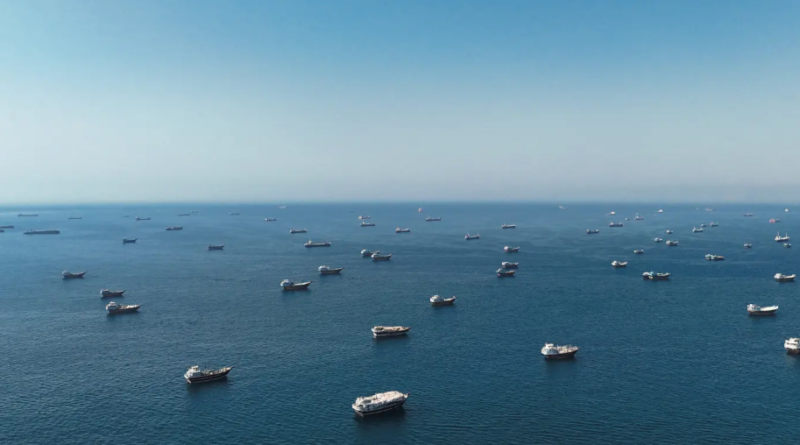
The Strait of Hormuz remains one of the world’s most strategically important waterways, with a significant portion of global oil shipments passing through the narrow channel.
The United States has maintained a naval blockade around Iranian ports as part of its pressure campaign against Tehran, while Iran has disrupted maritime traffic through the strait since the conflict began on Feb. 28.
Reports from Iranian independent media Friday evening indicated explosions had been heard near Bandar Abbas, though state-affiliated Iranian outlets denied the claims.
Despite an indefinite cease-fire announced on April 21, hostilities between the two countries have continued through a series of smaller confrontations.
The cease-fire initially began as a temporary two-week pause in fighting before being extended indefinitely. Since then, repeated incidents have threatened to undermine efforts to prevent a return to full-scale conflict.
Most recent clashes have centered around maritime activity in the Persian Gulf and Strait of Hormuz, though Iran also launched an attack against U.S. forces stationed in Kuwait earlier this week.
Earlier Friday, Trump acknowledged that Iran still possesses military capabilities despite months of U.S. and Israeli operations targeting its infrastructure.
“Most of the drone factories have been knocked out, most of the launching pads have been knocked out, and most of the missile manufacturing areas have been knocked out,” Trump said during an interview with NBC News.
“But they still have capacity. They have some missiles, they have some drones.”
The president estimated that Iran retains roughly 21% to 22% of the missile inventory it possessed before military operations began.
“It’s a lot of missiles, but it’s not what it was when we first attacked,” Trump said.
The latest exchange comes as negotiations over a broader agreement involving maritime access, sanctions, and Iran’s nuclear program remain unresolved, with both sides continuing military operations while diplomatic efforts proceed through intermediaries.