
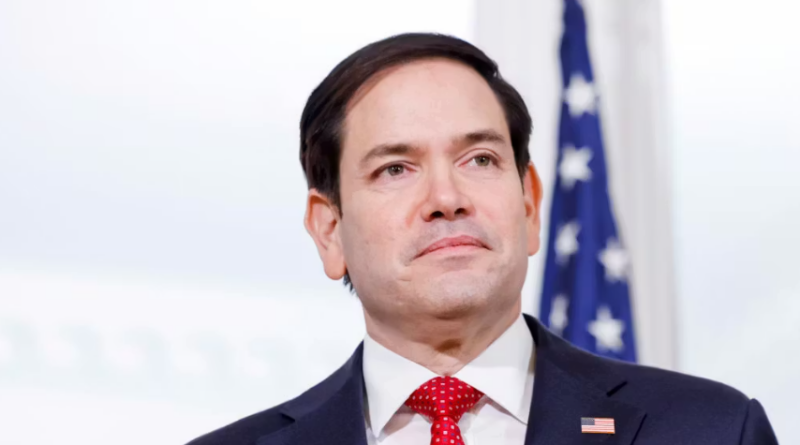
Marco Rubio Says President Trump’s Iran Deal Would Go Far Beyond Obama-Era Nuclear Agreement
Secretary of State Marco Rubio insisted Tuesday that any potential nuclear agreement negotiated by President Trump with Iran would be fundamentally different from the Obama administration’s controversial Joint Comprehensive Plan of Action.
Appearing before the Senate Foreign Relations Committee, Rubio argued that the Obama-era agreement failed because it allowed Iran to preserve the infrastructure needed to continue uranium enrichment.
“It is not JCPOA,” Rubio told lawmakers. “[That deal] would have expired this year, and it allowed them to keep all the enrichment equipment that they needed.”
Rubio warned that Iran has already enriched nearly 1,000 pounds of uranium to 60% purity, placing the regime dangerously close to weapons-grade capability.
According to Rubio, any future agreement must directly address both Iran’s enrichment systems and its stockpile of highly enriched uranium before sanctions relief is considered.
“It would have to deal with that question,” Rubio explained, “and it would have to deal with the highly enriched uranium that they currently are in possession of.”
The secretary’s remarks came as President Trump’s administration continues indirect discussions with Iran through mediators regarding a possible reopening of the Strait of Hormuz and the beginning of formal negotiations over Tehran’s nuclear ambitions.
Rubio suggested a breakthrough could come soon.
“There is the prospect before us — which could happen today, it could happen tomorrow, it could happen next week,” he said. “For the first time, certainly in my memory, they have agreed to negotiate aspects of their nuclear program that just a month ago, just a year ago, they were refusing to even mention.”
Rubio emphasized that President Trump’s strategy differs sharply from the Obama administration by maintaining heavy economic and military pressure on Tehran throughout negotiations.
Rather than offering immediate sanctions relief, Rubio said the United States would only consider lifting its naval blockade of Iranian ports if Tehran follows through on reopening the Strait of Hormuz.
“There wouldn’t have been a blockade if Iran had agreed to do what they said they would do when the cease-fire kicked in,” Rubio stated.
Meanwhile, President Trump rejected reports from Iranian state-linked media claiming communications between Washington and Tehran had broken down.
“Negotiations have been going on continuously,” President Trump wrote on Truth Social. “It’s time, one way or another, for you to make a Deal.”
Rubio also revealed that negotiations have been slowed by internal dysfunction within the Iranian regime, describing communications with Tehran as fragmented and cumbersome.
“Complicating that process, unfortunately, is their internal regime is somewhat fractured,” Rubio testified. “It takes days to get responses from their system.”
The secretary added that Iranian Supreme Leader Mojtaba Khamenei appears to be increasingly involved in negotiations through intermediaries, though he has not appeared publicly since reportedly being injured during Operation Epic Fury.
Rubio warned that if talks fail, Iran would face the United States without many of the military capabilities it previously relied upon before the joint US-Israeli strikes earlier this year.
“If it doesn’t work out, then obviously we still have a problem with respect to their nuclear ambitions,” Rubio said. “But what they won’t have is the conventional shield to hide behind any longer.”