
Abdul El-Sayed Faces Scrutiny Over Past Essay Linking Breast Cancer Funding to ‘Social Power and Privilege’
Michigan Democratic Senate nominee Abdul El-Sayed is facing renewed scrutiny over a 2012 essay in which he questioned whether breast cancer receives a disproportionate share of public research funding and suggested that the “social power and privilege” of people affected by certain diseases could influence which illnesses attract the most advocacy.
El-Sayed wrote the essay, titled “The Pink Ribbon Lobby and Everyone Else,” while working as an epidemiologist and physician in training. The piece was published through the 2×2 Project, which was sponsored by Columbia University’s Mailman School of Public Health.
In the essay, El-Sayed acknowledged that breast cancer is an important disease and said the historical treatment of women in medicine and public health made increased attention to the disease understandable. However, he questioned what he described as a disproportionate allocation of public research money toward breast cancer compared with other illnesses.
El-Sayed argued that diseases with highly organized advocacy movements can receive greater public attention and funding. He suggested two possible explanations, including that diseases with higher survival rates produce more survivors who can advocate for research and that advocacy could reflect the “social power and privilege” of the populations most likely to develop particular illnesses.
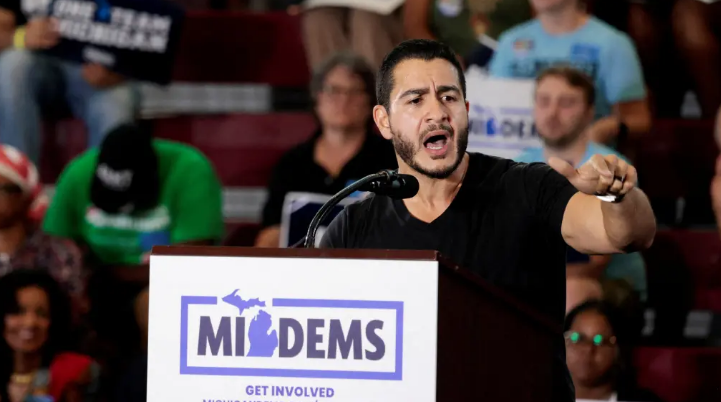
The comments have resurfaced as El-Sayed campaigns for Michigan’s open U.S. Senate seat. He won the Democratic nomination in August and is facing Republican Mike Rogers in the November general election.
El-Sayed’s campaign has defended his record on health care and said his comments concerned the allocation of research resources rather than opposition to breast cancer research. His campaign has also pointed to his public-health work and support for preventive services such as mammograms.
Breast cancer remains one of the most commonly diagnosed cancers among American women and the second-leading cause of cancer death among women, behind lung cancer. The disease has also become the focus of one of the country’s most recognizable health-awareness campaigns, symbolized by the widespread use of pink ribbons.
The resurfaced essay comes as El-Sayed makes health care one of the central issues of his Senate campaign. He supports Medicare for All and has argued that the federal government should play a larger role in ensuring Americans have access to medical treatment.
The controversy also adds to scrutiny of El-Sayed’s previous writings and public statements during the closely watched Michigan Senate contest. Republicans have highlighted several of his past comments during the campaign, while El-Sayed and his supporters have accused opponents of taking some of those remarks out of context.
El-Sayed has not disavowed the broader argument made in the 2012 essay about disparities in disease advocacy and research funding. His campaign’s response emphasizes that the piece was examining how public-health resources are distributed rather than arguing that breast cancer itself receives too much attention.