
Kavanaugh Leaves Door Open for Trump Mail-Ballot Rules Despite Supreme Court Setback
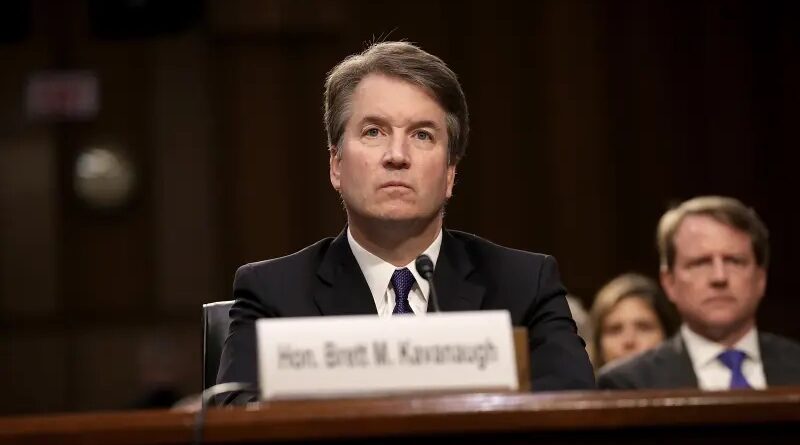
Supreme Court Justice Brett Kavanaugh has left open the possibility that the Trump administration’s new mail-ballot regulations could ultimately survive legal challenges, despite joining the majority in blocking the rules from taking effect before the November midterm elections.
The Supreme Court rejected the administration’s emergency request Monday to enforce new U.S. Postal Service requirements while litigation continues. The unsigned order concluded that the government was unlikely to succeed in its challenge to a preliminary injunction and that the factors governing emergency relief did not favor lifting the lower court’s order.
Kavanaugh, however, wrote separately to explain his reasoning. He said there is “at least a fair prospect” that the final regulation falls within the Postal Service’s statutory authority, indicating that his objection at this stage centered largely on implementing the policy so close to an election rather than concluding that the Postal Service necessarily lacks the power to adopt it.
Kavanaugh said applying the requirements during the 2026 elections would be “arbitrary and capricious” under the Administrative Procedure Act because state and local election officials do not have sufficient time to reasonably implement them. That timing problem led him to concur with the decision denying the administration’s emergency request.
The disputed rule would require states to provide certain voter information to the Postal Service and use USPS-approved ballot envelopes containing unique barcodes. Ballot mail that failed to comply with the federal requirements could be returned rather than delivered, prompting lawsuits from states and voting-rights organizations.
Two federal judges had already blocked implementation before the Supreme Court acted. The challengers have argued that the Postal Service exceeded its legal authority and that attempting to introduce major changes shortly before Election Day could interfere with otherwise valid mail ballots.
Justices Samuel Alito and Clarence Thomas went further than Kavanaugh and dissented from the Supreme Court’s decision. Alito argued that the government had satisfied the requirements for emergency relief and questioned portions of the challengers’ legal case.
President Trump sharply criticized the ruling afterward, including the three justices he appointed to the Supreme Court: Kavanaugh, Neil Gorsuch and Amy Coney Barrett. Trump argued that the decision represented another setback for his administration’s efforts to change mail-voting procedures ahead of the midterms.
The immediate result is clear for the 2026 election. The Postal Service requirements will remain blocked, allowing states to continue operating under their existing mail-ballot procedures as voting gets underway.
The underlying litigation, however, remains unresolved. Kavanaugh’s concurrence indicates that at least one justice who opposed implementing the rule this year sees a plausible statutory basis for the Postal Service’s authority, leaving the broader legal question open for future proceedings after the midterms.