
Blanche’s DOJ Launches New Process to Restore Gun Rights for Certain Americans With Criminal Records
Attorney General Todd Blanche has finalized a major new Justice Department rule allowing certain Americans who have lost their federal firearm rights because of criminal convictions to apply to have those Second Amendment rights restored.
The Federal Firearm Rights Restoration program creates an application process for people prohibited from possessing firearms under federal law. Rather than automatically restoring gun rights to convicted criminals, the Justice Department will review applicants individually and determine whether they continue to pose a danger to public safety.
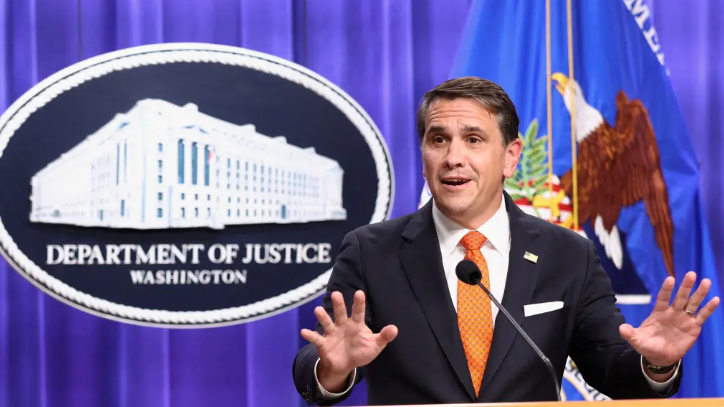
“The Second Amendment is not a second-class right,” Blanche said in announcing the rule. He argued that the federal government should not permanently strip Americans of a constitutional right without considering whether they still present a legitimate public safety threat.
Federal law already contained a mechanism allowing certain prohibited individuals to seek restoration of their firearm rights. But Congress effectively shut down the process beginning in 1992 by preventing the Bureau of Alcohol, Tobacco, Firearms and Explosives from spending money to process the applications.
The Trump administration’s new system shifts the process to the Justice Department and gives the attorney general authority to make restoration decisions. Applications will be submitted through a new online system, with the program scheduled to roll out in stages.
Applicants will be required to provide fingerprints, character references and supporting documentation. DOJ officials will examine factors including the person’s criminal history, reputation, conduct since the conviction and whether restoring firearm rights would create a threat to public safety.
The administration is making clear that the program is primarily intended to provide relief to people who no longer present a danger, particularly those with old or nonviolent convictions. People convicted of violent offenses, registered sex offenders and others considered dangerous will generally be denied unless extraordinary circumstances exist.
The Justice Department expects enormous interest in the program. Estimates cited alongside the rollout suggest the government could eventually receive hundreds of thousands of applications, demonstrating how many Americans have permanently lost their firearm rights under existing federal restrictions.
Supporters of the change have argued for years that someone who committed a nonviolent crime decades ago, completed their sentence and demonstrated rehabilitation should have a meaningful opportunity to regain constitutional rights. The Second Amendment Foundation praised the broader restoration effort as providing an alternative to expensive litigation or the difficult process of obtaining a presidential pardon.
Gun-control organizations have attacked the administration’s decision, arguing that expanding firearm-rights restoration could create unnecessary public safety risks. The Justice Department counters that its individualized review process is specifically designed to prevent dangerous applicants from regaining access to firearms.
The move is part of President Trump’s broader second-term push to roll back federal gun restrictions. Earlier this year, the Justice Department and ATF announced dozens of proposed and finalized regulatory changes following a comprehensive review ordered under Trump’s executive action protecting Second Amendment rights.
For Blanche, the new system establishes a principle that losing gun rights does not necessarily have to mean losing them forever. Americans who have served their sentences and can demonstrate that they no longer pose a danger will now have a federal pathway to petition the government for restoration of their Second Amendment rights.