
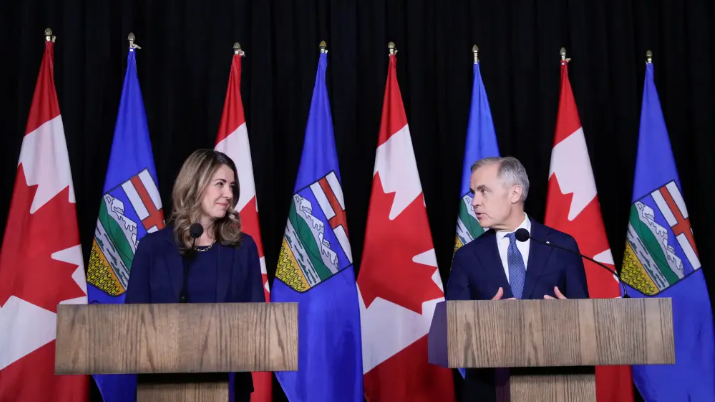
‘Canada’s Texas’ Threatens Secession As Alberta Weighs Vote That Could Open Door To Becoming 51st US State
The Canadian province of Alberta is once again at the center of a growing independence movement, with a proposed referendum on secession fueling speculation that the energy-rich region could eventually seek statehood in the United States.
Often referred to as “Canada’s Texas” because of its vast oil reserves, conservative politics and strong energy sector, Alberta is Canada’s fourth-largest province by both land area and population, home to roughly five million residents and some of the largest proven oil reserves on Earth.
Many Albertans have long argued that the province contributes disproportionately to Canada’s federal finances while receiving inadequate political representation and facing policies from Ottawa that they believe undermine the local economy.
The roots of Alberta’s frustration date back decades. In 1980, then-Prime Minister Pierre Trudeau imposed energy policies that controlled local oil prices and increased export taxes. Many Albertans blame those policies for a severe economic downturn that led to rising unemployment and an exodus of investment.
More recently, disputes over carbon taxes, environmental regulations and restrictions on pipeline construction have reignited calls for greater autonomy and, for some, outright separation from Canada.
The province is now preparing for a referendum expected in October that could ask voters whether Alberta should begin the process of leaving Canada.
Secession advocates have gathered significant support in recent years, with hundreds of thousands of Albertans signing petitions calling for a vote. While previous efforts were ruled invalid by courts because of issues involving indigenous treaty rights, the movement has continued to gain attention.
Some supporters envision Alberta becoming an independent nation, while others have floated the idea of joining the United States as its 51st state.
The prospect has attracted interest among some conservative American commentators. Analysts at the The Heritage Foundation have argued that Alberta’s massive energy resources could dramatically strengthen America’s position as a global energy producer.
President Donald Trump has repeatedly joked about Canada becoming the 51st state and has previously suggested he would welcome Alberta if it sought closer ties with the United States.
Canadian Prime Minister Mark Carney, however, has strongly rejected any notion of Canadian provinces leaving the federation and has described the referendum push as a “very dangerous bluff.”
Canada’s constitutional framework also creates significant obstacles for any secession effort. Following a narrow independence referendum in Quebec in 1995, the Canadian Supreme Court ruled that no province can unilaterally leave Canada. Any successful separation would require negotiations with the federal government and the rest of the country.
Polling suggests that while separatist sentiment exists in Alberta, support for actually leaving Canada remains limited. Recent surveys indicate that only about one in five voters favors beginning the formal secession process.
The debate has nevertheless drawn international attention as one of the most serious challenges to Canadian unity in decades, with observers in regions such as Scotland, Catalonia and even parts of the United States watching closely.
For now, Alberta’s future remains uncertain. Any move toward independence would require overcoming legal, political and economic hurdles, and questions remain about whether Albertans would ultimately prefer independence, continued membership in Canada or some form of closer relationship with the United States.