
Trump Education Department To Move 7.5 Million Borrowers Off Biden Student Loan Plan In Major Overhaul
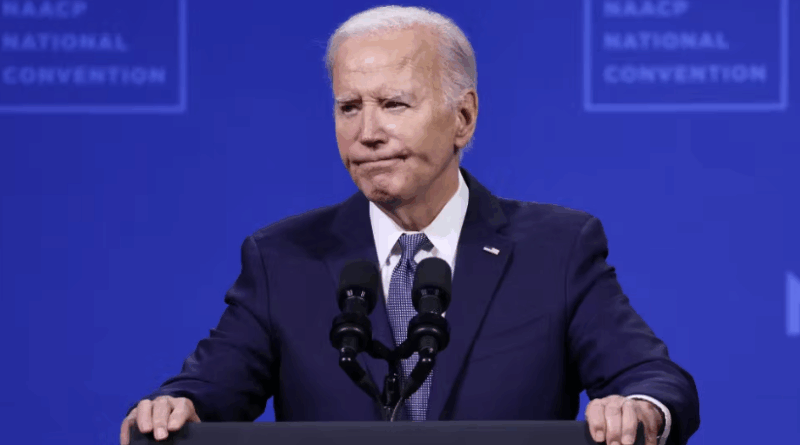
The Department of Education will begin transitioning roughly 7.5 million student loan borrowers off former President Joe Biden’s SAVE repayment plan starting July 1, as the Trump administration rolls out a sweeping overhaul of federal student loan repayment programs.
Under Secretary of Education Nicholas Kent said borrowers enrolled in the SAVE plan will have 90 days to select a new repayment option as the administration seeks to simplify what officials describe as an overly complicated student loan system.
In total, borrowers enrolled in the SAVE program hold approximately $365 billion in outstanding student debt.
“We have over 40 repayment and discharge options currently, and the system has become overly complex and very difficult to understand,” Kent said, describing the existing framework as “a Frankenstein model.”
“One of the purposes of the Working Families Tax Cuts Act is to simplify repayment, so whether or not you have a certificate in pipe fitting or you have a Ph.D. in philosophy, it’s understandable and easy to navigate,” he added.
Under the new transition plan, student loan servicers will contact different groups of borrowers in phases, giving them 90 days to enroll in one of two repayment programs established by the Trump administration. The Biden-era repayment plans are scheduled to be completely phased out by July 1, 2028.
Kent said more than 300,000 former SAVE borrowers have already moved into the administration’s new income-driven repayment option, known as the Repayment Assistance Plan, or RAP.
Officials are staggering the transition to avoid overwhelming the system.
“If the millions of borrowers all sought to move off their plan at once it would create sort of a bottleneck,” Kent said. “And we don’t want that. We want to support borrowers.”
The Education Department has already begun notifying borrowers that the SAVE plan is no longer available.
“We started communicating with borrowers, earlier this year telling them that this plan is no longer an option and that they need to move to a new lawful repayment plan,” Kent said. “We’ve done two campaigns at the Department of Education, one this spring, one last month, and we’ll do a final one this month before we turn it over to the servicers.”
The changes come after a federal appeals court struck down the SAVE program in March. The plan had been projected to cost taxpayers as much as $475 billion by 2033.
Under RAP, borrowers will pay between 1% and 10% of their earnings based on adjusted gross income to satisfy their monthly obligations. Any remaining debt would be forgiven after 30 years if it is not fully repaid.
Education Department officials have argued that prior repayment programs often left borrowers with ballooning balances despite years of payments.
“If you are a borrower in RAP and you are making your on-time payments the way that you should, you will always see your balance decline,” Kent said.
The administration’s second option, the Tiered Standard Plan, extends the traditional 10-year repayment timeline to as long as 25 years for certain borrowers.
Kent criticized the Biden administration for implementing a repayment program that ultimately failed in court.
“The Biden admin did this themselves and then they get caught up in litigation, and now we have to deal with these 7 million students who I’m sure are frustrated and confused,” he said.
Kent stressed that the Trump administration’s new repayment options are grounded in congressional authority and designed to withstand legal challenges.
“Our repayment plans are congressionally mandated, meaning that they’re not going away anytime soon,” he said.
“It’s about putting the onus back on Congress and less about the department just doing whatever the hell it wants.”