
Democrat Roy Cooper Flips North Carolina Senate Seat, Defeats Trump-Backed Republican Michael Whatley
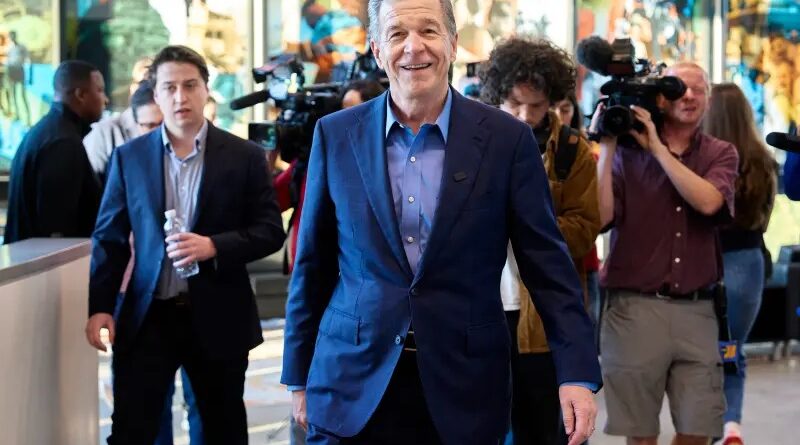
Former North Carolina Gov. Roy Cooper defeated Republican Michael Whatley in Tuesday’s closely watched U.S. Senate election, flipping a Republican-held seat and delivering Democrats a significant pickup in their effort to regain control of Congress.
Cooper, 69, emerged victorious over Whatley, the former Republican National Committee chairman who entered the race with President Trump’s endorsement. The Associated Press called the contest with Cooper holding approximately 66.8% of the vote compared with Whatley’s 31.6%, although those figures reflected an early stage of the vote count rather than the final result.
The victory means Cooper will replace retiring Republican Sen. Thom Tillis, who decided against seeking another term following disagreements with President Trump. It also makes Cooper the first Democrat elected to a U.S. Senate seat from North Carolina since 2008.
The result represents an important setback for Republicans in a state that President Trump carried in all three of his presidential campaigns. North Carolina has remained competitive in statewide elections, frequently supporting Republican presidential candidates while electing Democrats to prominent state offices.
Cooper entered the Senate race with extensive experience and statewide name recognition. Before serving two terms as governor, he spent 16 years as North Carolina’s attorney general, establishing a lengthy political career without losing a statewide election.
His popularity presented an immediate challenge for Republicans attempting to defend Tillis’ seat. Cooper had previously demonstrated an ability to attract independent voters and win gubernatorial elections even when Republican presidential candidates carried North Carolina.
Whatley, 58, brought a different political background to the contest. Although he had never previously held elected office, he had served as chairman of the North Carolina Republican Party and later led the Republican National Committee during President Trump’s successful 2024 reelection campaign.
His relationship with Trump became a defining feature of his Senate bid. The president encouraged Whatley to enter the race and subsequently endorsed him, giving the former party chairman a prominent position within the Republican campaign.
Whatley embraced the administration’s America First agenda, emphasizing immigration enforcement, public safety, tax reductions and economic policies designed to strengthen American businesses.
He also highlighted his experience working with Republican leaders, including his previous service in the administration of President George W. Bush and as chief of staff to former North Carolina Sen. Elizabeth Dole.
Throughout the campaign, Whatley argued that electing another Republican senator would help President Trump advance his legislative priorities and preserve the GOP’s congressional majority.
Cooper took a different approach, emphasizing household expenses and his record of working with Republicans during his years in state government.
The former governor made reducing living costs a central campaign promise, focusing on grocery prices, energy expenses and healthcare affordability.
He also criticized the Trump administration’s tariffs and its military conflict with Iran, arguing that federal policies were contributing to economic uncertainty and higher costs for American families.
Those arguments became increasingly prominent as the campaign progressed, particularly amid concerns about gasoline prices and the broader economic effects of the war.
Whatley responded by defending the administration’s economic policies and pointing to Republican-backed tax reductions as measures intended to benefit American workers and businesses.
The Republican candidate also sought to make crime a major issue, criticizing Cooper’s record as governor and attorney general.
Whatley accused Cooper of being insufficiently aggressive toward violent offenders and questioned decisions involving prisoner releases during the COVID-19 pandemic.
President Trump amplified those attacks during campaign appearances in North Carolina, criticizing Democratic leadership over public safety and arguing that Republican policies were necessary to strengthen law enforcement.
Cooper rejected the accusations and defended his record, maintaining that his administration had worked to protect communities while addressing the challenges facing the state’s criminal justice system.
The candidates also clashed over the response to Hurricane Helene, which devastated portions of western North Carolina in 2024.
Trump criticized Cooper’s handling of the disaster, while the former governor pointed to the emergency response and recovery work undertaken by state agencies, local governments and federal officials.
The disagreements reflected broader divisions over the role of government, disaster assistance and public spending.
Despite Whatley’s close relationship with President Trump, Cooper maintained a financial advantage throughout much of the campaign.
The Democrat consistently outraised his Republican opponent, providing additional resources for advertising, voter outreach and campaign operations.
As the election approached, national Republican organizations reduced planned spending in North Carolina and redirected resources toward other competitive Senate contests.
One Republican political operation shifted approximately $10 million originally intended for North Carolina into Kansas, where the party was defending another Senate seat.
Republican groups ultimately spent roughly $30 million of an initially planned $71 million in North Carolina, reflecting the changing allocation of campaign resources during the final weeks.
Cooper continued campaigning on his experience in state government and his promise to represent North Carolina independently of national political pressures.
Whatley maintained his support for President Trump’s agenda, appearing with the president and Vice President JD Vance during campaign events.
The Republican argued that North Carolina would benefit from having a senator closely aligned with the White House, particularly on immigration, energy production and economic legislation.
However, Cooper’s longstanding statewide recognition and financial advantage presented obstacles that Whatley was unable to overcome.
The outcome carries significant implications for the national Senate battle.
Republicans entered the midterm elections with a 53-47 advantage in the chamber, while Democrats needed a net gain of four seats to secure an outright majority.
North Carolina was among the most important Republican-held seats Democrats targeted, particularly after Tillis announced his retirement.
Cooper’s victory gives Democrats one of the pickups they need, although control of the Senate will depend on the results of other races across the country.
The contest also highlights North Carolina’s unusual political landscape.
Although the state has repeatedly supported Republican presidential candidates, voters have demonstrated a willingness to elect Democrats to statewide offices.
Cooper benefited from that political environment during his gubernatorial campaigns in 2016 and 2020, winning both elections while Trump carried the state in the presidential contests.
His Senate victory extends that pattern, demonstrating that North Carolina voters do not always support candidates from the same party in state and federal elections.
For Whatley, the defeat marks the end of his first campaign for elected office after years working within Republican political organizations.
He entered the race with the backing of President Trump and extensive experience managing party operations, but those advantages were not enough to defeat a well-established Democratic opponent.
For Cooper, the victory marks another stage in a political career that has included service as attorney general, governor and now senator-elect.
He will enter Washington as Democrats attempt to strengthen their position in Congress and challenge policies advanced by the Trump administration.
The result also means Republicans will lose a seat previously held by Tillis, increasing the importance of other Senate contests as the party works to preserve its majority.
With additional election results still being determined, North Carolina has become one of the first significant Republican-to-Democratic Senate flips of the 2026 midterms.
Cooper’s victory ends a competitive campaign between an experienced Democratic statewide official and a prominent Republican closely associated with President Trump, while adding another seat to the Democratic side of the Senate.