
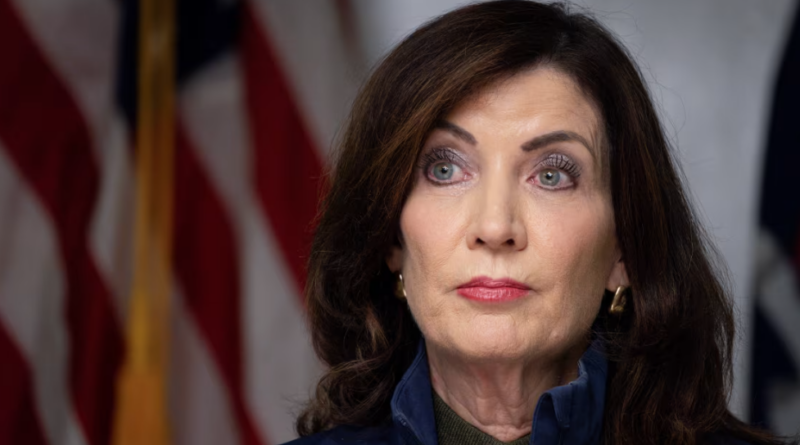
Kathy Hochul Defeats Republican Bruce Blakeman as Democratic Socialists Prepare to Push New York Further Left
New York Gov. Kathy Hochul secured a second full term Tuesday night, defeating Republican Nassau County Executive Bruce Blakeman and extending Democratic control of the governor’s office as the state faces continuing battles over taxes, affordability, immigration and the growing influence of democratic socialists.
The Associated Press called the race shortly after polls closed at 9 p.m., confirming Hochul’s victory over the Trump-backed Republican. Her reelection means Democrats will retain control of the governor’s office, which Republicans have not held since George Pataki left office in 2006.
Hochul’s victory also creates a new political challenge for her administration. New York City Mayor Zohran Mamdani and his Democratic Socialist allies are expected to push Albany toward higher taxes on wealthy residents and expanded government spending, potentially setting up a confrontation with the governor over the direction of state policy.
Mamdani played an increasingly visible role in Hochul’s reelection campaign, appearing alongside her during the closing weeks and encouraging progressive voters to support the Democratic ticket. Their cooperation represented a significant shift from earlier disagreements over taxation and the state’s economic priorities.
The mayor has advocated increasing taxes on wealthy New Yorkers and corporations to finance an ambitious agenda involving housing, public transportation and childcare. Hochul has previously resisted major tax increases, arguing that New York must remain competitive with other states.
That disagreement could become one of the defining issues of her second full term. With progressive lawmakers seeking additional funding for their priorities, Hochul will face pressure to determine how much of Mamdani’s agenda she is willing to embrace.
Blakeman made those concerns central to his campaign, warning that Hochul’s relationship with Mamdani could lead to additional taxes and government spending in a state already struggling with high living costs.
The Republican county executive promised not to impose new taxes and argued that New York needed a different economic approach to prevent residents and businesses from leaving for more affordable states.
Blakeman also emphasized energy costs, criticizing state policies that restrict natural gas development and arguing that New York should take greater advantage of its domestic energy resources.
During the campaign, he pointed to neighboring Pennsylvania as an example of a state benefiting economically from natural gas production. He maintained that New York’s energy policies had contributed to higher utility bills for households and businesses.
Immigration enforcement was another major dividing line. Blakeman advocated stronger cooperation with federal immigration authorities and criticized sanctuary policies that restrict the ability of local law enforcement agencies to assist federal officials.
Hochul defended her administration’s approach and sought to portray Blakeman as closely aligned with President Trump’s immigration and economic agenda.
The governor repeatedly highlighted her Republican opponent’s relationship with the president, making the national political environment a prominent part of her reelection campaign.
President Trump endorsed Blakeman and appeared with him during the campaign, describing the Nassau County executive as a strong Republican ally.
Blakeman embraced much of the president’s agenda while also attempting to appeal to independent and moderate voters concerned about affordability and public safety.
However, he struggled to overcome Hochul’s statewide recognition and the Democratic Party’s substantial registration advantage.
Polling conducted during October consistently showed the governor holding a double-digit lead. A Siena survey conducted shortly before Election Day placed Hochul ahead by 14 percentage points, while other major surveys showed similar margins.
Those findings suggested a more comfortable race for Hochul than her first gubernatorial election in 2022, when she defeated Republican Lee Zeldin by approximately six percentage points.
Hochul initially became governor in August 2021 following Andrew Cuomo’s resignation. She subsequently won her first full term in 2022, becoming the first woman elected governor of New York.
Her latest victory extends her administration through 2030 and gives her another four years to pursue policies involving housing, education, energy and economic development.
Throughout the campaign, Hochul emphasized programs intended to address affordability, including inflation refund checks, expanded childcare subsidies and free school meals.
She also promoted restrictions on smartphone use in schools and other initiatives that she presented as practical responses to concerns affecting New York families.
Her administration has faced criticism over government contracts, the state’s homecare program and the continuing financial pressures confronting residents.
Those controversies did not prevent her from maintaining a substantial advantage over Blakeman during the campaign.
New York’s high taxes and cost of living remained prominent subjects throughout the race, particularly among suburban voters and residents concerned about the state’s business environment.
Blakeman argued that Democratic leadership had failed to address those problems and promised to reduce spending, lower taxes and support policies intended to attract investment.
Hochul countered that her administration had delivered financial assistance to families and pursued measures to reduce household expenses.
The candidates also offered different approaches to public safety. Blakeman highlighted his record as Nassau County executive and emphasized support for law enforcement, while Hochul pointed to state investments in crime prevention, transit security and mental health services.
The election attracted substantial participation, with more than 1.9 million New Yorkers casting ballots during early voting. That represented a significant increase from the previous gubernatorial election.
Hochul also benefited from support among prominent Democratic officials, including Rep. Alexandria Ocasio-Cortez, who appeared with the governor during the final days of the campaign.
The growing cooperation between Hochul, Mamdani and progressive Democrats could have important consequences for policymaking in Albany.
Although the governor has resisted some of the left’s tax proposals, progressive lawmakers are expected to press for expanded public spending and new revenue measures.
Mamdani’s political allies have made clear that they want the state government to play a larger role in funding their priorities, particularly initiatives involving housing affordability, public services and transportation.
The governor will also need to consider concerns from business organizations and moderate Democrats who oppose policies they believe could accelerate the departure of high-income residents and employers.
That tension could become especially important during state budget negotiations, when lawmakers must reconcile competing spending demands with available revenue.
For Republicans, Tuesday’s defeat represents another unsuccessful attempt to regain the governor’s office after two decades of Democratic control.
Blakeman entered the race with President Trump’s endorsement and a campaign centered on affordability, taxes, immigration enforcement and public safety. Despite those issues, he was unable to build enough statewide support to unseat the incumbent.
For Hochul, the victory provides a renewed mandate to govern but does not resolve the competing demands within her party.
Her second full term will begin with heightened expectations from progressive Democrats who helped support her reelection, alongside continued concerns about New York’s taxes, utility bills and overall cost of living.
The central question now shifts from whether Hochul can defeat a Republican challenger to how she will navigate the growing influence of Mamdani and the Democratic Socialist movement.
With another four years in Albany secured, Hochul must decide whether to maintain her resistance to major tax increases or move closer to the progressive economic agenda being advanced by New York City’s mayor and his allies.