
Former FBI Official Breaks Down in Court as Trump Justice Department Pursues Hunter Biden Laptop Charges
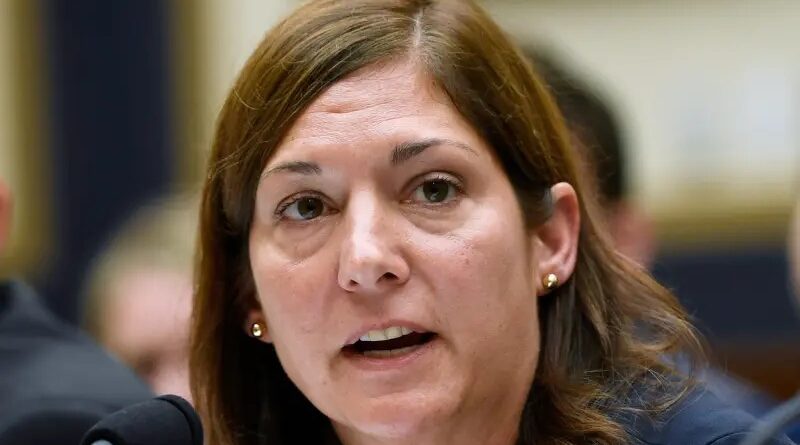
Former FBI official Nikki Floris broke down in tears during a federal court hearing Tuesday as President Trump’s Justice Department pursued criminal charges accusing her and another former bureau official of lying to Congress about their knowledge of the Hunter Biden laptop investigation.
Floris, 46, appeared alongside former FBI counterintelligence official Bradley Benavides, 56, at a preliminary hearing in Washington, D.C., where prosecutors presented evidence they say contradicts the pair’s sworn testimony before the House Judiciary Committee in 2023.
The former officials are accused of concealing their involvement in FBI investigations concerning Hunter Biden during the 2020 presidential election, when the laptop controversy became a major political issue.
Floris was seen crying during a courtroom break as attorneys debated whether federal investigators had established sufficient evidence to proceed with the prosecution.
Both defendants face charges of making false statements to Congress, an offense carrying a maximum sentence of five years in federal prison.
The case stems from their work with the FBI’s Foreign Influence Task Force, a unit responsible for investigating potential foreign interference in American elections.
Floris served as a deputy assistant director overseeing the task force from 2019 through 2022, while Benavides served as a section chief during the period leading up to the 2020 election.
Federal prosecutors allege that both officials were aware of the FBI’s investigations involving Hunter Biden and participated in internal discussions about the laptop before the presidential election.
However, when questioned by congressional investigators three years later, the defendants allegedly provided accounts that contradicted internal FBI records.
According to the Justice Department, Floris testified that she had not participated in discussions concerning Hunter Biden while serving with the task force.
Benavides allegedly told congressional investigators that he first learned the FBI possessed Hunter Biden’s laptop after reading about it on Wikipedia in 2023.
Federal authorities contend that internal communications, emails and witness accounts demonstrate that both officials had substantially more knowledge of the investigation than they acknowledged.
Prosecutors say Benavides discussed the laptop with other FBI personnel before the 2020 election, directly contradicting his congressional testimony.
The government also alleges that Floris communicated with investigators handling Hunter Biden-related matters over an extended period.
The charges were announced Friday by U.S. Attorney Jeanine Pirro, whose office is overseeing the prosecution.
Pirro argued that senior law enforcement officials must be held accountable if they knowingly provide false information to congressional investigators.
She emphasized that truthful testimony is essential to Congress’s ability to conduct oversight of federal agencies.
FBI Director Kash Patel also defended the investigation, pointing to the bureau’s efforts to examine allegations of political misconduct within its former leadership.
Patel said the administration had dismantled the FBI unit associated with the disputed activities and would continue investigating officials accused of abusing positions of public trust.
The prosecution has renewed scrutiny of the FBI’s handling of the Hunter Biden laptop controversy, which emerged during the final weeks of the 2020 presidential campaign.
The laptop became a major political issue after reporting revealed emails and other materials concerning Hunter Biden’s foreign business relationships.
The FBI had obtained possession of the laptop in 2019, before the controversy became public.
During the election, questions arose about whether the material was authentic and whether foreign intelligence services might have been involved in distributing or manipulating information.
The controversy intensified after 51 former intelligence officials signed a public letter suggesting that the laptop story had characteristics associated with a Russian information operation.
The letter did not establish that the laptop was Russian disinformation, but its contents became a significant part of the public debate.
The FBI’s Foreign Influence Task Force was responsible for identifying and responding to potential foreign influence operations.
Federal prosecutors now allege that Floris and Benavides misrepresented the task force’s involvement in matters concerning Hunter Biden when they appeared before congressional investigators.
The criminal complaint references an FBI operation known as Round River, which involved reviewing information about Hunter Biden and assessing whether certain allegations could be associated with foreign disinformation.
Investigators contend that the defendants were involved in communications concerning that operation and related investigative activities.
During Tuesday’s hearing, FBI Special Agent Bryan Witt testified about records gathered during the investigation.
Witt said internal messages and other communications contradicted portions of Benavides’ account of when he first learned about the laptop.
However, he acknowledged that investigators did not possess direct evidence establishing that the defendants intentionally lied to Congress.
That distinction became important because federal prosecutors must prove more than an inaccurate statement to obtain a conviction.
The government must establish that the defendants knowingly and willfully made materially false statements.
Defense attorneys challenged the strength of the evidence and questioned whether the prosecution had demonstrated the required criminal intent.
They also scrutinized the circumstances surrounding the investigation’s launch.
Witt testified that FBI Director Patel directed investigators in Kansas City to examine the matter after President Trump called for an investigation into alleged intelligence-community interference in the 2020 election.
The agent acknowledged concerns that the inquiry could appear politically motivated because of its origins and timing.
Defense attorneys argued that the investigation was designed to pursue a predetermined political narrative rather than evaluate evidence objectively.
Federal prosecutors rejected allegations that they had acted improperly.
The hearing also produced a confrontation over the Justice Department’s attempt to expand the charges.
Shortly before Tuesday’s proceedings, prosecutors submitted an amended criminal complaint seeking to add an obstruction allegation against the defendants.
The additional charge accused Floris and Benavides of attempting to interfere with Congress’s investigation through their allegedly false testimony.
However, U.S. Magistrate Judge Zia Faruqui questioned why prosecutors had submitted the new complaint without first obtaining judicial approval.
The judge criticized the government’s decision to file the document without a judge’s signature or a prior finding of probable cause.
He rejected the attempted amendment and proceeded with the hearing on the original false-statement allegations.
Faruqui also questioned the Justice Department’s departure from ordinary charging procedures.
The judge said the unusual filing raised concerns about the government’s understanding of the applicable legal requirements.
The prosecution’s procedural difficulties added another complication to a case already facing challenges from defense attorneys.
Floris and Benavides surrendered to federal authorities Friday after arrest warrants were issued in connection with the original criminal complaint.
Neither defendant has been convicted, and both are presumed innocent unless prosecutors establish guilt beyond a reasonable doubt.
The case has also attracted attention because the charges were filed shortly before the November 3 midterm elections.
The alleged false statements occurred in 2023, while the underlying FBI activities date to the 2020 presidential campaign.
Defense attorneys have questioned why prosecutors pursued criminal charges at this stage, particularly given the politically sensitive nature of the allegations.
The Justice Department maintains that the timing does not eliminate its responsibility to investigate potential violations of federal law.
The dispute highlights broader disagreements over how the FBI handled politically sensitive investigations during the final months of the 2020 election.
Congressional Republicans have spent years examining whether federal law enforcement and intelligence officials improperly influenced public discussion of the Hunter Biden laptop.
Those investigations have included questions about internal FBI communications, interactions with social media companies and the treatment of information concerning the Biden family.
The latest criminal case focuses more narrowly on whether two former officials gave truthful answers when congressional investigators questioned them about their knowledge and responsibilities.
The government does not need to establish that the laptop controversy changed the election’s outcome to prosecute knowingly false congressional testimony.
It must instead demonstrate that the defendants made materially false statements with the required criminal intent.
The defense maintains that the available evidence does not satisfy that standard.
Judge Faruqui did not issue a final ruling Tuesday on whether probable cause exists to sustain the original charges.
The preliminary hearing is scheduled to continue Wednesday, October 28.
At that proceeding, the court is expected to continue examining the evidence and arguments concerning the government’s allegations.
For the Trump administration, the prosecution represents another effort to examine the conduct of former federal officials involved in politically sensitive investigations.
For Floris and Benavides, the case presents the possibility of criminal penalties over statements they made to Congress several years after the events under investigation.
The courtroom proceedings have already produced sharp disagreements over the evidence, the government’s charging procedures and the origins of the investigation.
With the judge declining to approve the additional obstruction charge and withholding a decision on probable cause, the immediate future of the prosecution remains unresolved.