
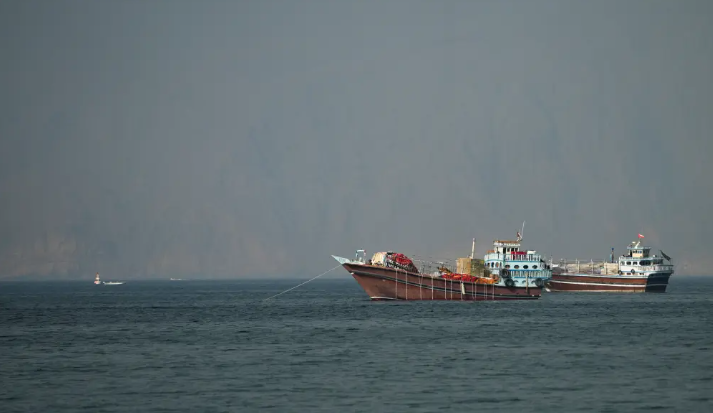
Iran Blacklists 45 Tankers in Strait of Hormuz, Threatens Fines and Cargo Seizures
Iran has blacklisted 45 oil and gas tankers accused of violating its rules for crossing the Strait of Hormuz, threatening the vessels with fines, detention and even confiscation of their cargo as tensions with the United States continue to escalate.
The warning was issued by Iran’s newly established Persian Gulf Strait Authority, which Tehran created to oversee maritime traffic through the strategically vital waterway. Iranian authorities did not publicly detail the specific violations allegedly committed by each of the vessels.
The blacklist includes tankers connected to several major international shipping companies, including Saudi Arabia’s Bahri, the UAE’s ADNOC Logistics & Services and Navig8 Tankers. Ships operated by Klaveness Ship Management, Stolt Tankers and South Korea’s Sinokor were also included.
Iran warned that the consequences could extend beyond the 45 vessels themselves. Ships conducting ship-to-ship transfers with blacklisted tankers could also face penalties, potentially expanding Tehran’s restrictions throughout international shipping networks operating in the Persian Gulf.
The move represents another escalation in the months-long confrontation over control of the Strait of Hormuz. Tehran has previously demanded that vessels obtain clearance before crossing the waterway and pay fees associated with security and transit, while the United States has challenged Iran’s efforts to control international shipping.
The Strait of Hormuz remains one of the world’s most important energy corridors. Before the current conflict, roughly one-fifth of the world’s daily oil and liquefied natural gas shipments passed through the waterway, meaning disruptions there can quickly affect global energy markets.
Despite months of fighting and maritime disruption, significant amounts of oil are continuing to move through the strait. American officials say nearly 8 million barrels per day are currently passing through, although commercial tracking services have reported considerably lower observable volumes as some vessels travel without transmitting normal tracking signals.
Iran’s latest threat comes as the Trump administration prepares a major new economic offensive against Tehran. Treasury Secretary Scott Bessent has promised sweeping sanctions intended to cut Iran off from its remaining sources of international revenue and pressure foreign governments, banks and companies to stop doing business with the country.
Tehran has warned that countries supporting Washington’s new sanctions campaign could be treated as participating in an “act of war.” Iran has promised a harsh response while simultaneously facing mounting economic pressure at home, including a sharp decline in the value of its currency.
The tanker blacklist gives Iran another potential tool for retaliation. Rather than attempting to completely halt traffic through Hormuz, Tehran could threaten individual vessels, cargoes and shipping companies with penalties while increasing the financial and security risks associated with operating in the region.
Shipowners placed on the blacklist can appeal to Iranian maritime authorities and provide explanations seeking removal from the restricted list. Until then, however, Tehran is warning that the vessels could face detention, financial penalties or confiscation if Iranian authorities determine they have again violated its rules.
The confrontation is therefore increasingly developing into competing American and Iranian attempts to control the economic lifelines running through the Persian Gulf. Washington is trying to financially isolate Tehran, while Iran is demonstrating that it can use its position along the Strait of Hormuz to place additional pressure on international shipping and global energy markets.