
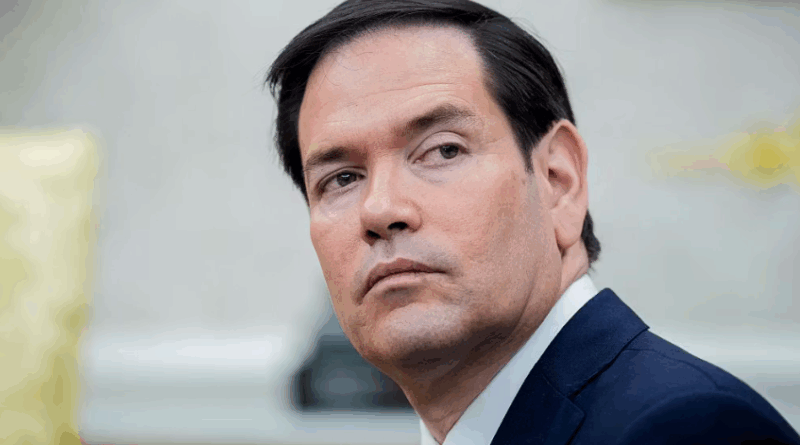
Marco Rubio Blasts Ukraine Over Strikes on American Oil Shipments, Demands Zelensky Focus on Ending War
Secretary of State Marco Rubio is calling out Ukraine over military strikes that reportedly damaged commercial vessels carrying American-owned oil in the Black Sea, warning that the attacks are worsening an already serious global energy crisis.
Rubio revealed that American energy companies have contacted the Trump administration to complain about Ukrainian attacks affecting their shipments, even as Washington continues working to negotiate an end to the war between Russia and Ukraine.
The secretary of state said he does not believe Ukrainian forces deliberately targeted American commercial interests, but made clear that the consequences remain unacceptable.
“We have seen strikes on energy vessels in the Black Sea,” Rubio told Breitbart News in an interview released Sunday.
He explained that American companies had contacted federal officials after learning that their oil cargoes were aboard vessels struck by Ukrainian forces.
Rubio emphasized that the world is already dealing with major disruptions to energy supplies and cannot afford additional instability caused by attacks on commercial shipping.
The secretary said the incidents have generated frustration within the administration, particularly because Washington has already raised concerns about attacks affecting American energy interests.
Rubio did not publicly identify the vessels involved or provide independent documentation of the reported damage. His allegations concern American-owned cargo, which does not necessarily mean the ships themselves were American-owned or registered in the United States.
The controversy comes as President Trump attempts to stabilize international energy markets while pursuing a diplomatic settlement to the nearly five-year conflict.
Ukraine has repeatedly targeted Russian oil facilities, refineries and maritime infrastructure in an effort to weaken Moscow’s ability to finance its military operations.
Those strikes have become a source of disagreement between Washington and Kyiv, especially as disruptions to energy production and transportation contribute to higher fuel costs internationally.
American energy companies have commercial interests connected to oil exports moving through the Black Sea, including infrastructure that transports crude from Kazakhstan through Russian territory.
That complicated network means attacks intended to damage Russian energy operations can also affect companies and cargoes with American financial interests.
Rubio previously raised similar concerns in September, warning that American-linked vessels and energy supplies had been caught in Ukrainian strikes.
The latest comments demonstrate that the issue remains unresolved despite discussions between American and Ukrainian officials.
The secretary of state also directly challenged Ukrainian President Volodymyr Zelensky over allegations that the Trump administration had temporarily suspended intelligence sharing with Kyiv.
Speaking to reporters Monday during a visit to Uzbekistan, Rubio rejected Zelensky’s account and insisted that the United States had not interrupted its intelligence assistance.
“I don’t know where he’s getting these things from or why he’s saying these things to the press,” Rubio said.
The secretary then delivered a direct message to the Ukrainian president.
“There’s been no pause. Zelensky should be focused on bringing an end to this war,” Rubio declared.
His remarks followed Zelensky’s appearance on NBC’s Meet the Press, where the Ukrainian leader claimed that Ukraine had temporarily lost access to American intelligence used to detect incoming Russian ballistic missile attacks.
Zelensky said the assistance had subsequently resumed and expressed appreciation for its restoration.
The conflicting accounts have added to tensions between the two governments as President Trump pushes for a negotiated settlement.
American intelligence remains particularly important to Ukraine because of its ability to provide early warning of Russian missile launches.
Ukrainian officials have maintained that such assistance cannot easily be replaced by intelligence from European partners.
The dispute over intelligence sharing follows another disagreement involving Starshield, a military satellite communications system developed by Elon Musk’s SpaceX.
Zelensky has complained that restrictions affecting the system’s operation at high speeds have interfered with Ukrainian military drones and air defense operations.
The Trump administration and Musk have denied responsibility for ordering the restrictions, leaving questions about their origin unresolved.
The series of disputes comes as the White House takes additional steps to address rising energy costs.
On October 9, President Trump announced plans to import substantial quantities of diesel fuel in an effort to ease pressure on American consumers.
The administration has also delayed implementation of additional sanctions targeting Russia as Trump attempts to keep Moscow engaged in peace negotiations.
Those decisions have drawn objections from Ukrainian officials, who argue that reducing economic pressure on Russia could make it harder to force concessions from President Vladimir Putin.
Trump has defended his approach, explaining that he does not want to undermine diplomatic progress by driving Russia away from negotiations.
The president has also criticized Ukraine’s continued attacks on Russian diesel refineries, arguing that the strikes are damaging global energy markets and affecting American fuel prices.
In a Sunday Truth Social post, Trump emphasized that negotiations are underway and suggested that maintaining communication with Moscow is essential to reaching an agreement.
The president also pointed to Russia’s relatively limited assistance to Iran during the ongoing Middle East conflict as another consideration in his diplomatic strategy.
Trump has sought to prevent Russia from expanding its support for Tehran while simultaneously attempting to negotiate an end to the fighting in Ukraine.
According to a Wall Street Journal report published Monday, Putin recently suggested a potential meeting involving Trump and Chinese President Xi Jinping to discuss a possible settlement.
The proposal was reportedly raised during a telephone conversation between Trump and Putin on October 9.
No finalized agreement for such a meeting has been announced.
Rubio has continued emphasizing that neither Russia nor Ukraine is achieving a decisive military victory.
The secretary pointed specifically to the battlefield situation in Ukraine’s Donetsk region, where Russian forces control most of the territory but have struggled to overcome heavily fortified Ukrainian defensive positions.
Rubio said Ukrainian forces maintain an important defensive line that military strategists regard as critical to protecting territory farther west.
Russia has been unable to capture the remaining Ukrainian-held positions despite prolonged fighting and substantial military losses.
At the same time, Ukraine has been unable to force Russian troops out of the occupied territory.
Rubio argued that the stalemate reinforces the need for serious negotiations rather than continued fighting without a clear path toward a military resolution.
He reiterated that the United States remains prepared to help mediate an agreement whenever the parties are willing to pursue one.
The administration’s approach reflects President Trump’s repeated commitment to ending the war through diplomacy while limiting additional economic damage to the United States.
For Washington, the dispute now involves more than the battlefield. Ukrainian attacks affecting commercial energy shipments, disagreements over American intelligence assistance and rising global fuel costs have become increasingly important considerations.
Rubio’s latest warning makes clear that the administration expects Ukraine to address concerns involving American commercial interests while concentrating on a negotiated end to the conflict.
With the war approaching its fifth anniversary in February, the secretary of state is pressing both sides toward a settlement, arguing that continued fighting carries growing economic and security consequences without delivering a decisive victory.