
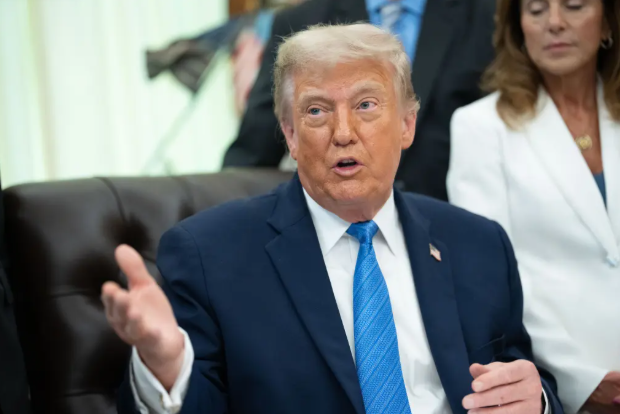
President Trump Blames Democrats’ Midterm Victory for Historic Stock Market Crash That Wiped Out Trillions
President Trump is blaming Democrats’ sweeping victories in the 2026 midterm elections for a historic Wall Street collapse that erased trillions of dollars in market value Thursday. The president warned that the election results had delivered a devastating blow to Americans’ retirement savings, accusing Democrats of undermining the economic progress achieved during his administration.
The Dow Jones Industrial Average plunged 1,833 points Thursday, a decline of 3.44%, while the technology-heavy Nasdaq Composite fell 5.52%. The S&P 500 dropped 4.36%, with companies represented in the S&P 500 and Nasdaq losing a combined $5.4 trillion in market value. The extraordinary sell-off ranked among the most severe single-day market declines in recent years.
President Trump addressed the collapse in a series of Truth Social posts, directly connecting the losses to Tuesday’s election results. He described the sell-off as one of the worst days in stock market history and expressed frustration that gains accumulated during his presidency had been threatened so quickly.
“Such a sad thing to watch!” Trump wrote, lamenting the damage to American retirement accounts. He argued that his administration had worked to bring financial markets to unprecedented heights before the election results triggered a sudden reversal.
The president specifically blamed Democrats for the downturn, referring to the party as “Dumocrats” while warning Americans that their 401(k) retirement accounts had suffered significant losses. In a subsequent post, Trump reiterated his argument that Democratic victories were responsible for the market collapse and suggested voters should recognize the economic consequences of the election.
Wall Street’s sharp decline followed a dramatic political shift in Washington, where Democrats captured control of both chambers of Congress. The party flipped more than 40 Republican-held House seats and seven Senate seats, with additional races still undecided. The results significantly weakened Republican control over federal policymaking and raised questions about the future of President Trump’s economic agenda.
Investor concerns centered heavily on the possibility that the incoming Democratic majority would impose new restrictions on artificial intelligence development and data center construction. Technology companies have played a major role in driving stock market gains, and uncertainty surrounding future federal regulations contributed to widespread selling across the sector.
Artificial intelligence companies and businesses connected to data center infrastructure were among those particularly affected. Investors worried that stricter oversight and limitations on construction could disrupt expansion plans, increase operating costs, and reduce future profitability. The concerns extended beyond individual technology companies, contributing to losses across the broader market.
The sell-off was particularly striking because stocks had surged immediately after Tuesday’s elections. On Wednesday, the Dow climbed more than 1,500 points as investors initially expressed optimism that divided government could create favorable conditions for businesses. President Trump celebrated that rally, highlighting the stock market’s record-setting performance during his administration.
However, Thursday’s losses rapidly reversed the previous day’s enthusiasm. As investors evaluated the implications of Democratic congressional control, concerns about technology regulation and future economic policy intensified. The sudden change demonstrated how quickly market expectations can shift following major political developments.
The administration has consistently emphasized stock market performance as evidence of its economic achievements. President Trump has repeatedly highlighted record highs in major indexes, arguing that his policies have encouraged investment, supported American businesses, and strengthened retirement accounts. Thursday’s decline presented a sharp challenge to that message, although a single trading session does not determine the market’s long-term direction.
The broader economic environment has also been complicated by elevated energy prices and uncertainty surrounding the military conflict with Iran. Those pressures contributed to voter dissatisfaction during the midterm campaign and remain significant concerns for businesses and households. Market analysts have identified multiple factors behind the sell-off, meaning the entire decline cannot be conclusively attributed to the election results alone.
Despite the market turmoil, President Trump expressed confidence that American financial markets would recover. He predicted that the economy and stock market would ultimately emerge stronger, signaling that his administration intends to continue pursuing its economic priorities despite the incoming Democratic congressional majorities.
The president’s comments underscore the growing political battle over the direction of the American economy following the midterms. With Democrats preparing to exercise greater influence over federal legislation and regulatory oversight, investors will be closely watching whether their policy proposals create additional uncertainty for businesses.
For President Trump, the immediate priority is restoring confidence after a dramatic decline that affected millions of Americans with investments and retirement savings. Although Thursday’s losses exposed Wall Street’s concerns about the changing political environment, the president remains confident that the market can recover and return to record-setting levels.