
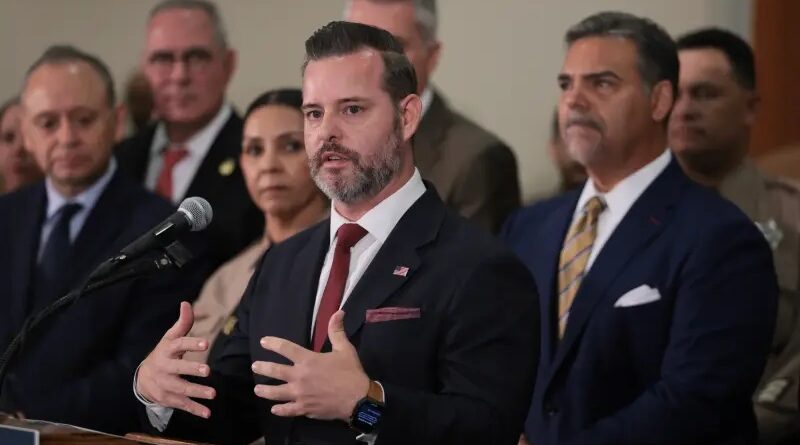
Top Trump DOJ Prosecutor Jason Reding Quiñones Resigns Amid Investigation Into Russiagate Controversy
Jason Reding Quiñones, the federal prosecutor overseeing a major Justice Department investigation into allegations of misconduct surrounding the Russia investigation targeting President Trump, has officially resigned. His departure marks another significant leadership change within the Trump administration’s Justice Department, coming just days after Republicans suffered major losses in the 2026 midterm elections.
Attorney General Todd Blanche announced the resignation Friday, thanking Quiñones for his service as U.S. attorney for the Southern District of Florida. Blanche praised his leadership in combating violent crime, drug trafficking, sex trafficking, and international criminal organizations, highlighting his involvement in a high-profile case against former Cuban leader Raúl Castro.
Quiñones confirmed that his resignation was effective immediately, expressing gratitude to President Trump for the opportunity to serve. He described his time leading the federal prosecutor’s office in his home district as a tremendous honor and thanked the attorneys, investigators, and law enforcement officers who worked alongside him. He did not publicly identify a specific reason for stepping down.
The resignation carries particular significance because Quiñones had been entrusted with overseeing one of the Justice Department’s most politically sensitive investigations. The inquiry examines whether officials from previous Democratic administrations engaged in coordinated misconduct involving investigations of President Trump, including the FBI’s examination of alleged connections between his 2016 presidential campaign and Russia.
The investigation, frequently described as the grand conspiracy probe, was launched in August 2025 to examine allegations that senior government officials improperly used federal intelligence and law enforcement institutions against Trump. Investigators have scrutinized decisions made during the Obama and Biden administrations, including the origins of the Russia investigation and subsequent federal investigations involving the president.
Among the prominent figures examined are former CIA Director John Brennan, former Director of National Intelligence James Clapper, and former FBI Director James Comey. Federal investigators have issued subpoenas seeking testimony and records concerning intelligence assessments, investigative decisions, and the conduct of officials involved in examining Russian interference in the 2016 election.
A major component of the inquiry concerns the intelligence community’s assessment of Russian election interference and whether officials misrepresented information during congressional testimony. Brennan has faced particular scrutiny over statements concerning the CIA’s role in preparing the assessment. His attorneys have rejected allegations of wrongdoing, while investigators have continued examining whether any federal laws were violated.
The investigation has encountered substantial internal disagreements over its scope, management, and the evidence necessary to pursue criminal charges. Several prosecutors assigned to the inquiry have departed, raising questions about the pace of the investigation and the Justice Department’s ability to move forward with potential indictments.
Former federal prosecutor Joe diGenova, who had been selected to help lead the investigation, resigned in September following disagreements over the handling of the case. Another prominent attorney associated with the inquiry, Kurt Olsen, subsequently departed. Their exits contributed to uncertainty surrounding an investigation that has attracted considerable attention from President Trump’s political allies.
Despite months of investigative activity, the broader conspiracy inquiry has not produced the sweeping criminal indictments that some Trump allies had anticipated. The absence of charges has intensified questions about whether prosecutors have obtained sufficient evidence to establish criminal wrongdoing by former intelligence and law enforcement officials.
Quiñones’ resignation also follows the departure of Harmeet Dhillon, who stepped down Thursday as head of the Justice Department’s Civil Rights Division. The two resignations represent significant changes in the department’s senior leadership immediately following the midterm elections, although neither departure has been publicly established as a direct consequence of the Republican defeat.
Beyond the Russiagate investigation, Quiñones oversaw an extensive federal prosecutorial operation in South Florida. His office pursued cases involving organized crime, immigration offenses, financial misconduct, narcotics trafficking, and national security threats. During his first year, the office reported hiring 115 prosecutors and professional staff while reducing vacancies and expanding its enforcement capabilities.
His tenure also included involvement in the indictment of former Cuban leader Raúl Castro in connection with the 1996 shootdown of aircraft operated by the Miami-based exile organization Brothers to the Rescue. The case drew particular attention in South Florida, where Cuban American communities have long demanded accountability for the deaths of four men aboard the aircraft.
Quiñones, a military veteran and former Florida judge, was among President Trump’s earliest confirmed U.S. attorney appointments during his second administration. His selection reflected the president’s effort to install prosecutors committed to strengthening federal law enforcement and reviewing controversies involving previous administrations.
Following his resignation, First Assistant U.S. Attorney Yara Klukas is expected to assume leadership of the Southern District of Florida on an acting basis. According to reporting citing a person familiar with the matter, the Justice Department intends to continue the grand conspiracy investigation under her supervision, although its future direction remains uncertain.
The departure leaves the Trump administration facing another consequential personnel decision as congressional Democrats prepare to exercise greater oversight of federal agencies. President Trump has repeatedly questioned the conduct of officials involved in the original Russia investigation, and the Justice Department’s examination of those allegations remains an important issue for his administration.
Quiñones leaves office with a record that includes major criminal prosecutions, organizational restructuring, and oversight of an investigation into one of the most contentious political controversies of Trump’s presidency. His resignation raises new questions about the future of the Russiagate inquiry, but the Justice Department has not announced that the investigation is ending.