
President Trump Says Iran Talks In ‘Final Stages,’ Warns Military Action Could Come Quickly
President Trump said Wednesday that negotiations with Iran are entering their “final stages,” while warning that the United States is prepared to take aggressive military action if Tehran refuses to reach an acceptable agreement.
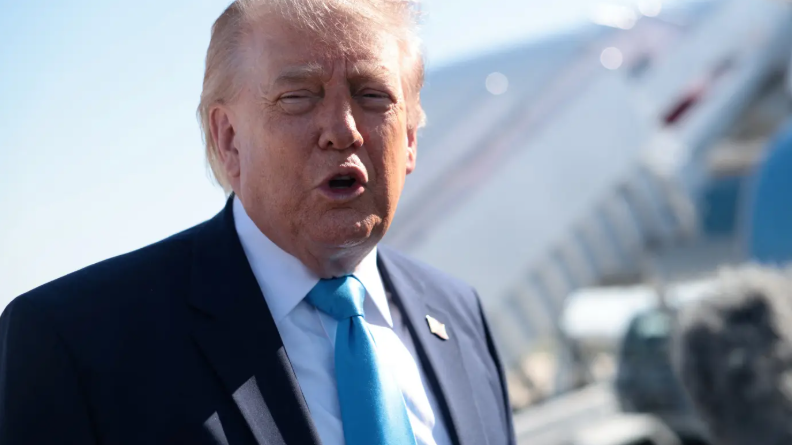
“We’re in final stages of Iran,” President Trump told reporters at Joint Base Andrews. “We’ll see what happens. Either [we] have a deal or we’re going to do some things that are a little bit nasty, but hopefully that won’t happen.”
The president’s comments immediately rattled global energy markets, though oil prices ultimately dropped sharply following his remarks. U.S. crude prices remained below $100 per barrel, settling near $98.94 after posting their biggest decline in roughly two weeks.
At the center of the negotiations are ongoing disputes over Iran’s nuclear program and the continued closure of the strategically critical Strait of Hormuz, a vital shipping route for global oil and commercial trade.
President Trump later expanded on the negotiations while speaking after delivering the commencement address at the United States Coast Guard Academy.
“It could go very quickly, or a few days,” Trump said. “We’re all ready to go. We have to get the right answers. It would have to be complete 100% good answers.”
The president reiterated that he remains willing to delay military action if additional time could help avoid casualties and secure a diplomatic breakthrough.
“If I can save people from getting killed by waiting a couple of days, I think it is a great thing to do,” Trump said.
The Trump administration has repeatedly insisted that Iran must formally commit to never obtaining nuclear weapons as part of any agreement. Tehran, however, continues maintaining that its nuclear activities are solely for peaceful civilian energy purposes.
The standoff over the Strait of Hormuz has become another major sticking point in negotiations. Cargo ships and oil tankers have remained stalled as uncertainty surrounding the waterway disrupts global trade and energy markets.
International officials are increasingly warning about the broader economic fallout from the ongoing crisis.
The Food and Agriculture Organization warned Wednesday that prolonged disruption in the region could eventually trigger a severe global food crisis, particularly in poorer countries heavily dependent on fertilizer exports from the Middle East.
“The window for preventive action is closing quickly,” the organization warned.
Food prices have already begun rising in several regions, with experts cautioning that countries across Asia, Africa, and Latin America could face worsening shortages and inflation if shipping disruptions continue.
President Trump has maintained a hardline approach toward Iran throughout negotiations while simultaneously signaling openness to a deal if Tehran agrees to strict conditions involving nuclear restrictions and regional stability.