
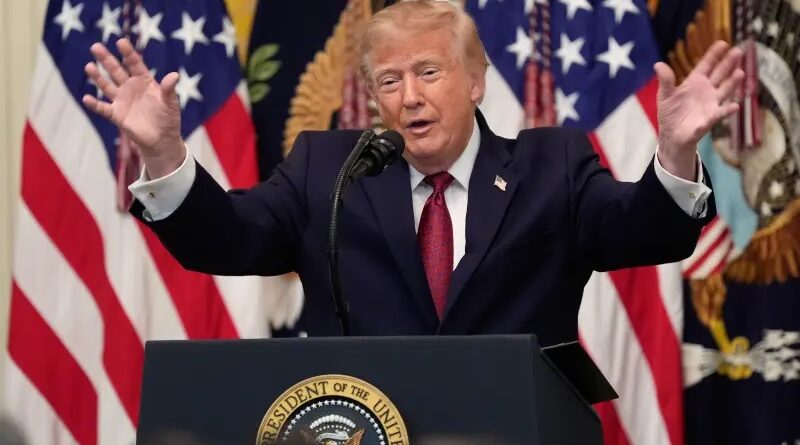
President Trump Says Renewed War With Iran Is Highly Unlikely as Negotiations Continue, Warns U.S. Military Remains Ready
President Trump expressed growing confidence Sunday that the United States can avoid another major military confrontation with Iran, declaring that renewed warfare is highly unlikely as diplomatic negotiations continue. The president emphasized that Tehran must agree to strong terms addressing its nuclear program and reopening the Strait of Hormuz, while warning that American forces remain prepared to act if diplomacy fails.
During a 20-minute telephone interview with CNN, Trump repeatedly downplayed the likelihood of ordering another large-scale military operation against Iran. He maintained that the country’s military capabilities have already been severely weakened and argued that Iranian leaders have compelling reasons to reach an agreement with Washington.
“It depends on whether or not they sign a very strong agreement,” Trump said when asked about the possibility of renewed fighting. He added that further military action was highly unlikely to be necessary, although he refused to rule out additional strikes if circumstances demanded them.
The president’s comments represent one of his clearest indications that he would prefer to resolve the remaining disputes through negotiations rather than resume the broader military campaign that began in February. However, Trump made clear that any agreement must address American security concerns and prevent Iran from rebuilding its nuclear capabilities.
Trump pointed to the extensive damage inflicted on Iran’s military infrastructure during previous American operations. According to the president, Iranian forces retain only about 10% of their former missile capacity and approximately 15% of their drone capabilities, largely because American strikes destroyed critical production facilities.
He also claimed that Iran’s air defense network has been effectively eliminated, leaving the country vulnerable to additional American attacks. Those assessments were presented by Trump during the interview and have not been independently verified in their entirety.
Despite emphasizing diplomacy, Trump stressed that the United States has maintained a substantial military presence in the region. He said three American aircraft carriers are positioned near Iran, including one that recently arrived, providing the administration with considerable military options if negotiations collapse.
The president described American forces as fully prepared for renewed operations and warned that Iran would face overwhelming consequences if another major confrontation became necessary. His remarks reinforced the administration’s strategy of maintaining military pressure while pursuing a diplomatic settlement.
Trump also revealed that American military planners have identified potential infrastructure targets throughout Iran, including power plants and major transportation routes. He claimed that U.S. forces could destroy 38 Iranian bridges within approximately one hour if ordered to launch a broader campaign.
However, the president expressed reluctance to attack infrastructure that would take years to rebuild. Trump noted that destroying bridges could leave Iran facing a decade of reconstruction and emphasized that he would prefer to avoid inflicting that level of damage.
The warnings come as negotiations remain focused on two major disputes: Iran’s nuclear activities and the continued disruption of commercial shipping through the Strait of Hormuz. The strategic waterway is one of the world’s most important oil transportation routes, and restrictions on maritime traffic have contributed to economic uncertainty and higher energy costs.
Iranian attacks and threats against commercial vessels have complicated efforts to restore normal shipping through the region. Although the broader military confrontation has subsided, sporadic incidents and continued tensions have prevented a lasting resolution.
Qatar has emerged as a central mediator in the negotiations, working to establish conditions that could allow Washington and Tehran to reach a broader agreement. Regional officials have discussed proposals involving limited confidence-building measures intended to restart negotiations over Iran’s nuclear program.
Among the proposals under consideration are potential adjustments to American economic restrictions and arrangements allowing international inspectors to examine Iranian nuclear facilities. Discussions have also addressed the possibility of reopening the Strait of Hormuz under temporary security arrangements.
However, significant disagreements remain. Iranian officials have demanded relief from American sanctions, access to frozen financial assets, an end to the U.S. blockade, and other concessions before agreeing to comprehensive nuclear negotiations.
The Trump administration has maintained that any settlement must include meaningful restrictions on Iran’s nuclear activities. American officials have repeatedly emphasized that Tehran cannot be permitted to rebuild capabilities that could eventually support the development of nuclear weapons.
Iranian leaders insist that their nuclear program serves peaceful purposes, but their enrichment activities and restrictions on international monitoring have remained central sources of tension with Washington and other governments.
Diplomatic activity has intensified following the November 3 midterm elections, which delivered major congressional victories to Democrats. The conflict’s economic consequences and public frustration over prolonged military involvement became prominent political issues during the campaign.
The election results have increased pressure on Washington to find a negotiated resolution, although Trump has insisted that his administration retains substantial leverage over Tehran. He pointed to Iran’s deteriorating economic conditions, financial restrictions, and weakened military capabilities as reasons its leaders may ultimately accept American demands.
The president claimed that Iran is experiencing extraordinary inflation and severe financial difficulties. He argued that continued economic pressure, combined with the threat of additional military action, has placed Tehran in a difficult negotiating position.
The administration has also continued limited military operations when it considers them necessary. Recent American strikes against Iranian air defense positions near Qeshm Island demonstrated that the military confrontation has not completely ended, even as diplomatic efforts continue.
Trump’s latest comments suggest that he is willing to give negotiations additional time while maintaining the ability to respond militarily. The president has not announced a deadline for reaching an agreement or indicated that the United States intends to withdraw its forces from the region.
For now, the administration appears focused on using its military advantage and economic leverage to secure a settlement without returning to full-scale warfare. Whether that strategy succeeds will depend on Iran’s willingness to accept restrictions on its nuclear program and restore international access to the Strait of Hormuz.
President Trump has made clear that another major conflict is not his preferred outcome. But with American forces positioned throughout the region and negotiations still unresolved, he is keeping every option available while pressing Tehran to reach an agreement that protects American interests and prevents another prolonged war.