
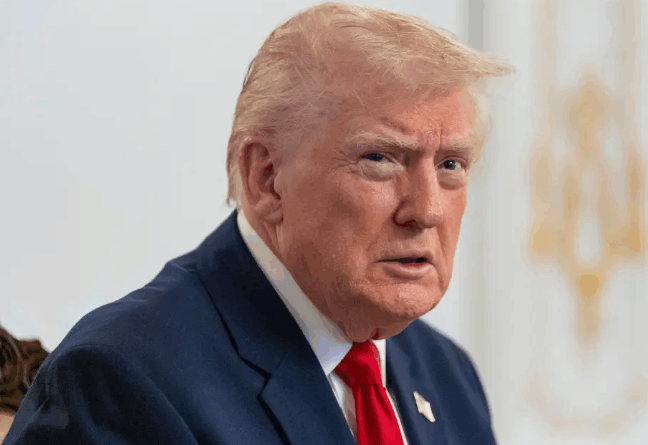
President Trump Warns Democrats Will “Destroy Our Country” in Fiery Arizona Rally Ahead of Midterm Elections
President Donald Trump delivered a forceful warning to American voters during a campaign rally in Arizona on Wednesday, arguing that Democratic victories in the upcoming midterm elections would threaten the progress his administration says it has made on border security, economic policy and national security.
Speaking to supporters in Bullhead City, Trump urged Republicans to turn out in large numbers on November 3, portraying the election as a critical opportunity to preserve his administration’s agenda.
The president appeared alongside Republican gubernatorial nominee Rep. Andy Biggs, who is challenging Democratic Gov. Katie Hobbs in one of the country’s closely watched state elections.
Trump used the rally to criticize Democratic leadership, revisit controversial moments from his February State of the Union address and endorse Republican candidates seeking offices throughout Arizona.
He warned that allowing Democrats to regain political power could reverse policies implemented since his return to the White House.
The president told supporters that Arizona would send a message about the country’s future by electing Republican candidates at every level of government.
He also emphasized patriotism, arguing that Americans who believe in the country’s institutions and traditions should remain politically engaged.
The rally took place less than three weeks before the midterm elections, which will determine control of Congress and numerous state offices.
Trump has been traveling across the country to support Republican candidates, with recent campaign appearances in Ohio, Alaska and other states.
Arizona has become a particularly important battleground because of its competitive statewide elections and closely divided political landscape.
The state supported Trump in the 2016 and 2024 presidential elections but voted for Joe Biden in 2020.
Democrats have also secured several major statewide victories in recent years, including Hobbs’ narrow gubernatorial win in 2022.
Trump made defeating Hobbs a central objective of his appearance.
He criticized her leadership and argued that Arizona would benefit from replacing the Democratic administration with a Republican governor.
Biggs, a longtime Trump ally and former chairman of the conservative House Freedom Caucus, joined the president onstage to deliver his own message to voters.
The congressman encouraged Republicans to support the entire party ticket rather than focusing exclusively on the governor’s race.
He also revisited Trump’s February 24 State of the Union address, criticizing Democratic lawmakers for their reactions to several moments during the speech.
Trump expanded on that criticism, arguing that the opposition party had demonstrated a troubling attitude toward issues involving American citizenship and national pride.
One of the most contentious moments involved the president’s recognition of military veterans during the address.
Trump recalled honoring retired Navy Capt. E. Royce Williams, a decorated veteran who received the Medal of Honor for his service during the Korean War.
Williams was 100 years old when Trump presented the award.
The president also recognized World War II veteran George “Buddy” Taggart during the address.
At Wednesday’s rally, Trump accused Democratic lawmakers of failing to show proper appreciation for the honored veterans.
However, footage of the State of the Union shows Democrats standing and applauding during the recognition of Williams. Trump’s description appeared to combine that ceremony with a separate partisan exchange.
The confrontation he referenced occurred when Trump asked lawmakers to stand if they agreed that the federal government’s first responsibility was protecting American citizens rather than people living in the country illegally.
Republicans stood in response, while many Democratic lawmakers remained seated.
Trump criticized that reaction during the February speech and returned to the subject in Arizona.
He argued that the moment illustrated fundamental differences between the parties on immigration and the responsibilities of government.
The president has made immigration enforcement one of the defining priorities of his second administration.
His policies have emphasized border restrictions, deportations and stronger enforcement of federal immigration laws.
At the rally, Trump accused Democrats of supporting policies that would weaken border security and reverse his administration’s enforcement efforts.
Democratic leaders have disputed that characterization, arguing that their immigration proposals address enforcement alongside legal immigration procedures and humanitarian concerns.
Trump nevertheless presented the issue as a major dividing line in the November elections.
He also criticized Democratic economic policies, claiming that higher taxes and increased government spending would undermine American businesses and households.
The president argued that his administration’s economic agenda has helped attract investment and create conditions for future growth.
He pointed to tariffs and other economic policies as sources of federal revenue, although economists continue to debate their effects on prices, investment and consumers.
Trump also repeated his proposal to provide $5,000 payments to eligible American adults if Republicans retain control of Congress.
He suggested that revenue associated with his administration’s economic policies could help finance the payments.
The proposal has not been enacted into law, and its funding and implementation details remain unresolved.
Trump’s economic message comes as voters continue expressing concerns about inflation, housing affordability and household expenses.
Democrats have focused much of their midterm campaigning on those issues, accusing the administration’s tariffs and other policies of increasing costs for American families.
The Democratic National Committee responded to Trump’s campaign trip by arguing that Republican policies have made everyday necessities more expensive.
The party also criticized the administration’s handling of the conflict involving Iran and its consequences for energy markets.
Trump rejected Democratic criticism of his economic record and maintained that Republican control would allow his administration to continue pursuing its priorities.
The president’s appearance also served as a showcase for Arizona’s Republican candidates.
In addition to Biggs, Trump endorsed Sine Kerr, the Republican candidate for lieutenant governor.
Arizona voters will elect a lieutenant governor for the first time under changes to the state’s executive branch structure.
Trump praised Kerr and expressed confidence in her ability to serve alongside Biggs.
He also encouraged support for Republican secretary of state candidate Alex Kolodin.
Kolodin has emphasized election administration and voting procedures during his campaign, issues that have remained politically contentious in Arizona since the 2020 presidential election.
Trump described him as a strong advocate for election integrity.
The president additionally expressed support for Republican congressional candidates, including Paul Gosar, Abe Hamadeh, Eli Crane and Mark Lamb.
The endorsements reflected his effort to mobilize Republican voters across multiple contests rather than concentrating exclusively on the governor’s race.
Control of the House of Representatives remains an important consideration because congressional majorities determine which legislation can advance and how aggressively lawmakers can investigate the executive branch.
Republicans are seeking to preserve their ability to work with the White House, while Democrats are campaigning on affordability, healthcare and greater oversight of the administration.
The president also used the Arizona rally to remember conservative activist Charlie Kirk.
Kirk, the founder of Turning Point USA, played an influential role in organizing conservative students and younger voters before his death in 2025.
Trump paid tribute to Kirk on what would have been his 33rd birthday.
He encouraged supporters to honor Kirk’s political activism by participating in the upcoming elections.
The tribute carried particular significance in Arizona, where Turning Point USA was founded and developed into a prominent national conservative organization.
Kirk had been a vocal supporter of Trump and a major figure in efforts to increase Republican engagement among younger Americans.
The president’s remarks connected Kirk’s legacy with the broader political priorities he discussed throughout the rally.
Trump also continued criticizing Democratic positions on cultural and social issues, including policies involving children, schools and parental authority.
Those subjects have become recurring themes in Republican campaign messaging as candidates seek to distinguish themselves from Democratic opponents.
Democrats have generally framed their positions around civil rights, healthcare access and protections against discrimination, while Republicans have emphasized parental involvement and restrictions on certain medical procedures for minors.
The competing approaches remain subjects of debate in state legislatures, Congress and the courts.
Throughout his speech, Trump repeatedly returned to the argument that the November election would determine whether his administration could continue advancing its policies.
He portrayed Republican victories as necessary to protect the border enforcement measures, tax policies and regulatory changes implemented since January 2025.
Democrats, meanwhile, argue that gaining control of Congress would allow them to challenge the administration’s economic decisions and strengthen congressional oversight.
The president’s campaign strategy has involved traveling to both competitive states and traditionally Republican areas where strong turnout could help protect congressional seats.
His Arizona appearance was followed by another campaign stop in Montana, where Republicans are seeking to retain representation in a competitive House district.
The extensive travel schedule demonstrates the White House’s involvement in the midterm campaign.
Historically, the party controlling the presidency often faces difficulties in congressional elections held halfway through a presidential term.
That pattern has encouraged both parties to devote significant resources to turnout operations, advertising and candidate appearances.
For Republicans, maintaining congressional majorities would help Trump pursue legislation during the remaining two years of his presidency.
For Democrats, winning either chamber would provide greater influence over federal spending, oversight and the administration’s legislative agenda.
The Arizona governor’s race carries its own consequences for state policy.
Biggs has positioned himself as a conservative alternative to Hobbs, emphasizing border enforcement and closer alignment with the Trump administration.
Hobbs has defended her administration’s record and argued that Arizona needs continued investment in economic development, public services and education.
Their competing visions reflect broader disagreements over the relationship between state governments and Washington.
Trump’s appearance placed those differences before a large gathering of Republican supporters while highlighting his personal involvement in the race.
The president concluded his political message by urging voters to treat the election as an opportunity to determine the direction of both Arizona and the country.
His warning about Democrats destroying the country was a campaign argument rather than an established prediction about what would happen if the opposition party won.
Nevertheless, the statement captured the central theme of his rally: that the two parties offer sharply different approaches to immigration, economic policy and the federal government’s responsibilities.
With Election Day approaching, both Republicans and Democrats are intensifying their efforts to persuade undecided voters and mobilize their existing supporters.
The outcome will determine control of Congress, Arizona’s governorship and numerous other offices across the country.
For President Trump, Wednesday’s rally was another opportunity to put his political influence behind Republican candidates while defending the policies of his second administration.
For Arizona voters, the competing arguments will be tested at the ballot box on November 3, when they decide which candidates will represent them during the next stage of the country’s political debate.