
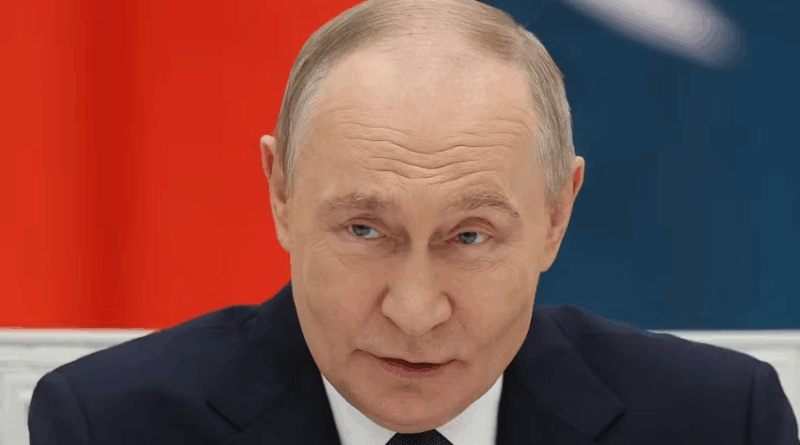
Republicans Pressure President Trump to Get Tough on Putin, Warn Russia Must Be Forced Into Peace Deal
President Trump is facing growing pressure from prominent Republicans and former national security officials who want his administration to take a tougher approach toward Russian President Vladimir Putin, warning that recent concessions to Moscow could undermine efforts to end the war in Ukraine.
The criticism comes after Trump agreed to ease restrictions on Russian diesel exports, a decision that has divided Republicans and raised concerns about whether the United States is applying sufficient economic pressure on the Kremlin.
Several Republican lawmakers argue that Putin has repeatedly demonstrated an unwillingness to negotiate a lasting peace agreement without facing serious financial and military consequences.
They are urging the president to enforce existing sanctions, maintain critical military assistance to Ukraine and use America’s economic influence to bring Russia back to the negotiating table.
Rep. Don Bacon of Nebraska delivered one of the strongest criticisms, comparing Trump’s recent approach to that of former British Prime Minister Neville Chamberlain, whose attempts to appease Nazi Germany preceded World War II.
“Our President has become Neville Chamberlain,” Bacon wrote on social media.
“We need a Churchill,” he added, referring to Winston Churchill’s leadership during Britain’s confrontation with Nazi Germany.
Bacon’s remarks reflect frustration among Republican foreign policy hawks who believe the administration has placed too much pressure on Ukraine while offering Moscow economic concessions.
The Nebraska congressman, a former Air Force officer, has repeatedly advocated stronger American support for Ukraine and tougher measures against Russia.
He has also criticized reports suggesting that Washington restricted intelligence sharing and satellite communications capabilities used by Ukrainian forces.
Those developments have intensified disagreements within the Republican Party over how President Trump should pursue his stated objective of ending the conflict.
Former Secretary of State Mike Pompeo, who also served as CIA director during Trump’s first administration, joined calls for a more assertive strategy.
During an appearance on Fox Business, Pompeo argued that a lasting settlement must demonstrate that powerful countries cannot invade their neighbors without consequences.
He said the United States should continue providing Ukraine with the resources necessary to pressure Russia militarily.
Pompeo specifically addressed reports involving disruptions to satellite communications systems used by Ukrainian troops.
The former secretary of state argued that Ukraine needs reliable military capabilities to conduct long-range operations and defend itself against Russian attacks.
His comments come amid controversy over restrictions affecting Starshield, a military satellite communications service operated by SpaceX.
Ukrainian officials have complained that reduced service speeds interfered with battlefield operations, including efforts to intercept Russian drones.
The disruptions reportedly affected communications during a period of intensified Russian missile and drone attacks.
SpaceX CEO Elon Musk explained that restrictions on the military service are determined by American defense authorities rather than independently imposed by the company.
President Trump has denied suspending routine intelligence sharing with Ukraine.
Two administration officials also denied Thursday that the president personally ordered the satellite service restrictions.
Nevertheless, lawmakers from both political parties are demanding answers about what caused the reported disruptions.
Republican Sens. Susan Collins of Maine, Lisa Murkowski of Alaska, John Cornyn of Texas and Thom Tillis of North Carolina joined a letter led by Democratic Sen. Jeanne Shaheen of New Hampshire.
The lawmakers requested an investigation by the Pentagon’s inspector general into the reported slowdown in military satellite communications.
Their concerns center on whether Ukrainian forces experienced avoidable operational disadvantages while attempting to defend against Russian attacks.
Ukraine’s chargé d’affaires, Denys Sienik, acknowledged Thursday that Starshield service speeds had improved.
However, he expressed hope that the system would return fully to its previous performance levels.
Ukrainian officials have emphasized that reliable communications are especially important for logistics and countering Russian attack drones.
The satellite controversy is only one part of a broader disagreement over Washington’s handling of the conflict.
Republican lawmakers are also questioning Trump’s recent decision to suspend sanctions affecting Russian diesel exports.
The administration reached an agreement with Moscow to increase diesel supplies to international markets as fuel prices remained elevated.
Trump has defended the arrangement as a way to ease costs for American farmers, transportation companies and consumers.
The White House maintains that increasing diesel availability could provide economic relief while the administration continues pursuing diplomatic negotiations.
However, critics warn that allowing additional Russian fuel sales could generate revenue for Putin’s government and weaken the financial pressure intended to discourage Moscow’s military operations.
Some estimates cited by opponents suggest that the arrangement could provide Russia with billions of dollars in additional revenue.
The precise financial impact remains uncertain and would depend on the volume of fuel sold, market prices and how the agreement is implemented.
Rep. Michael McCaul of Texas is among the Republicans calling for a tougher response.
McCaul joined a bipartisan letter urging Trump to fully enforce legislation imposing sanctions on Russia.
The legislation was named in honor of the late Republican Sen. Lindsey Graham of South Carolina, who had been a prominent advocate of stronger penalties against Moscow.
Lawmakers pointed to an October 18 deadline associated with implementing the sanctions.
McCaul argued that Putin responds to economic and military pressure rather than diplomatic goodwill alone.
He expressed concern that easing sanctions on Russian petroleum products could provide Moscow with additional resources to continue its invasion.
The Texas Republican also cited Russia’s continued bombardment of Ukrainian energy infrastructure despite Trump’s efforts to arrange a limited ceasefire.
McCaul argued that enforcing the sanctions would weaken Russia’s ability to finance the conflict and increase pressure on Putin to negotiate.
His position reflects a broader argument among Republican national security hawks that diplomatic engagement must be backed by credible consequences.
They contend that Russia has little incentive to accept meaningful concessions if it can continue military operations while receiving relief from economic restrictions.
The disagreement has become particularly visible following the collapse of a proposed ceasefire involving energy infrastructure.
Trump announced Sunday that Russia and Ukraine would suspend attacks on certain energy facilities.
The administration viewed the arrangement as a potential confidence-building measure that could reduce economic disruption and create conditions for broader negotiations.
Ukrainian President Volodymyr Zelensky initially indicated that his government would comply.
However, Ukrainian officials accused Russia of continuing attacks on power stations and other energy infrastructure.
Zelensky subsequently announced that Ukraine would resume strikes against Russian oil refineries.
Ukrainian drones struck a refinery in Russia’s Ryazan region Thursday, reportedly causing a fire at the facility.
The attack followed Zelensky’s public declaration that Ukraine would no longer observe the restrictions.
The Ukrainian president argues that his country cannot indefinitely suspend attacks on Russian energy infrastructure while Moscow continues targeting Ukrainian cities and power facilities.
Russia has disputed Ukraine’s account of the ceasefire and accused Kyiv of undermining diplomatic efforts.
The conflicting positions have complicated Trump’s attempts to negotiate even a limited reduction in hostilities.
They have also intensified concerns among Republican lawmakers who believe the administration is treating Russia and Ukraine differently despite Moscow having launched the full-scale invasion in February 2022.
The president has repeatedly argued that ending the war requires engagement with both governments.
Trump has also expressed frustration with Zelensky over Ukrainian attacks on Russian refineries, which he believes contribute to higher international fuel prices.
Last weekend, the president publicly suggested that Ukraine needed new leadership, further straining relations with Kyiv.
Zelensky responded by criticizing Washington’s diesel agreement with Moscow and questioning whether the United States was maintaining sufficient pressure on Russia.
The exchange underscored the growing diplomatic difficulties surrounding Trump’s peace initiative.
Former National Security Council official Fred Fleitz, who served during Trump’s first administration, offered a different perspective on how the president could secure an agreement.
Fleitz argued that a settlement would become possible when Putin concluded that Russia could not achieve victory through continued fighting.
He suggested that American negotiators should emphasize the need for Moscow to accept a diplomatic resolution rather than prolong the conflict.
Fleitz specifically identified Trump advisers Steve Witkoff and Jared Kushner as figures who could communicate that message during negotiations.
His position reflects the view that Trump’s personal diplomatic engagement could still produce results if paired with sufficient pressure on Russia.
Other former officials have expressed skepticism about the administration’s recent strategy.
Daniel Shapiro, a former American ambassador to Israel who also served in the Biden administration, criticized the decision to ease Russian diesel restrictions.
Shapiro argued that the agreement could provide Moscow with additional financial resources without significantly reducing fuel prices.
He also accused the administration of using its disagreement with Zelensky over refinery strikes to justify measures that could weaken Ukraine’s defenses.
Those accusations remain disputed by the White House, which has denied ordering certain reported restrictions on military assistance.
The administration maintains that its policies are intended to reduce energy costs and create opportunities for a negotiated peace.
Nevertheless, the controversy demonstrates that criticism of Trump’s Russia strategy is not limited to Democrats.
Several Republican lawmakers who generally support the president’s domestic agenda have openly challenged his recent foreign policy decisions.
Their concerns are rooted in the belief that Russia should face greater consequences for continuing the war.
The debate also reflects longstanding divisions within the Republican Party over America’s international commitments.
Some Republicans favor continued military assistance and sanctions as necessary tools for deterring Russian aggression.
Others question the financial burden of supporting Ukraine and argue that the United States should prioritize domestic concerns while encouraging a negotiated settlement.
Trump has attempted to balance those competing priorities by pursuing diplomatic engagement, limiting certain forms of assistance and seeking economic arrangements intended to address rising energy prices.
The challenge is whether those measures will persuade Moscow to negotiate or reduce the pressure that sanctions were designed to create.
The approaching midterm elections have added another dimension to the disagreement.
Higher diesel prices have become a concern for American households and businesses, particularly those dependent on transportation and agriculture.
Trump has argued that increasing fuel supplies can help reduce those costs.
Republican critics counter that economic relief should not come at the expense of strengthening Russia’s ability to continue the war.
The White House faces pressure to demonstrate that its energy policies can produce meaningful savings while preserving American leverage over Moscow.
Meanwhile, the October 18 sanctions deadline presents a more immediate test of how the administration intends to enforce existing legislation.
McCaul and other lawmakers are pressing for full implementation, arguing that the measures are essential to convincing Putin that continued military operations will carry escalating costs.
The administration has not publicly resolved all the questions surrounding sanctions enforcement, satellite communications restrictions and the future of military support for Ukraine.
Those issues could become central to congressional oversight in the coming weeks.
For Ukraine, the immediate concern remains its ability to defend against Russian attacks while maintaining enough military pressure to prevent Moscow from gaining additional territory.
For Russia, the central question is whether American economic policy will increase the costs of continuing the invasion or provide additional room to sustain it.
For President Trump, the disagreement presents a challenge involving both foreign policy and relations with members of his own party.
The president has made ending the Russia-Ukraine war a major diplomatic objective, but several prominent Republicans believe his recent approach risks reducing America’s negotiating leverage.
Their message is that achieving peace requires more than diplomatic outreach.
They argue that Putin must face sufficient economic and military pressure to conclude that continuing the conflict is more costly than negotiating an agreement.
As the sanctions deadline approaches and fighting continues, the administration faces growing demands to explain how its current strategy will produce a lasting settlement.
The disagreement highlights a fundamental question dividing Washington: whether easing pressure on Russia can encourage cooperation or whether stronger sanctions and continued support for Ukraine are necessary to bring Putin to the negotiating table.