
Qatar and GCC React to Israel’s Doha Offensive: Regional Outlook Shift
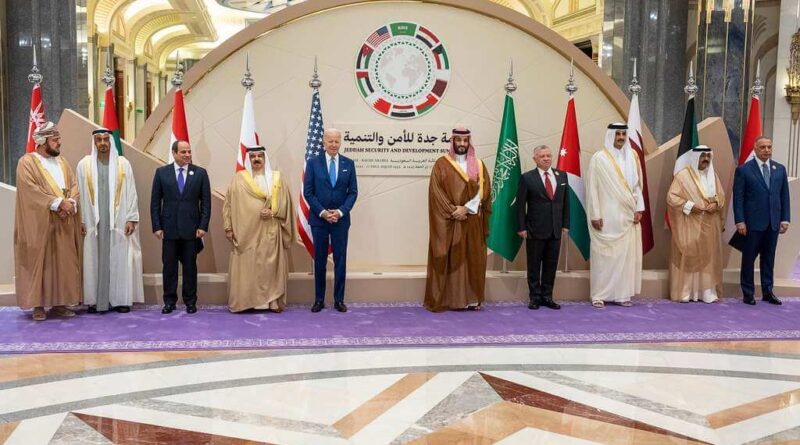
An influential individual from Qatar has shared with Newsweek that the country, in conjunction with other members of the Gulf Cooperation Council (GCC), is readying itself to communicate a significant transformation in regional perspectives on Israel following its recent offensive in Doha to President Donald Trump. On the threshold of the eminent week at the United Nations General Assembly, which will beckon global leaders and top-ranking officials to New York City, Qatari Foreign Ministry spokesperson Majed al-Ansari elaborates on the Israeli assault that targeted a Hamas office in Qatar’s capital, taking six lives, inclusive of 22-year-old Qatari Internal Security Force Lance Corporal Badr Saad Mohammed al-Humaidi al-Dosari, referring to it as ‘a pivotal incident that eternally altered Qatari society.’
The reverberations of the September 9 assault were felt well beyond the peninsula nation, with a population close to 2.6 million, nestled between Saudi Arabia and the Persian Gulf. The strike transpired whilst Hamas officials gathered to debate a fresh proposal for a ceasefire in the continued Gaza conflict that Qatar has actively helped mediate. Israeli Prime Minister Benjamin Netanyahu’s office subsequently took full responsibility for the operation, which Hamas claims resulted in the death of five of its members but spared its leadership. Reiterating this stance, Netanyahu convened with Secretary of State Marco Rubio at a U.S. Embassy to Israel event last week.
The growing conflict has since expanded to numerous other arenas, causing a surge in casualties in countries like Lebanon, Iraq, Iran, Syria, the West Bank, and Yemen. The region is on edge following this deadly incident instigated by Israel, which exacerbates an already harrowing conflict, putting to test President Trump’s pledge to bring peace to the Middle East. The U.S. military reportedly informed the White House of the impending attack in Doha and Qatari officials received notification of the strike from Trump’s special envoy, Steve Witkoff, just as the capital was being targeted.
Despite this, President Trump has refuted claims of having any prior knowledge of the operation and has since stated ‘that such a thing will not happen again on their soil.’ With Prime Minister Netanyahu leaving all possibilities open with regards to future offensives on Qatar, al-Ansari asserts that even as Qatar maintains its faith in its relationship with Washington, ‘we require a renewed impetus of reassurance.’ It is possible that until assurance is guaranteed, little progress can be made on related fronts, including Qatar’s involvement in peace talks.
This strike has sparked considerable deliberation over the future of Israel-Hamas negotiations, which reached a standstill after the short-lived ceasefire deal, supported by the U.S., collapsed just days before Trump’s inauguration for his second term in January, following its establishment in March. However, Qatar intends to use the regional insecurity as a catalyst to pave the way for the inception of a revitalized peace process with assistance from the U.S. and other concerned entities, building upon the looming uncertainty rather than alienating further diplomatic efforts.
Before the outbreak of the Gaza conflict in October 2023, the brunt of GCC’s security concerns were directed towards Iran. The tension between the GCC and Iran underwent a significant escalation over the years as Iran was held accountable for supporting its ally in Yemen, Ansar Allah, also referred to as the Houthi movement, in conducting attacks against Saudi Arabia and the UAE. Iran was also accused of directly targeting Saudi oil facilities in 2019, a claim Iran has always contested, denying it attacked GCC states or assisted Ansar Allah in doing so.
Subsequent conflicts that erupted within the year have questionably disrupted GCC’s cautious diplomacy with Iran and Israel. Placed squarely on the front lines, Qatar’s diplomatic position became even more challenging before the Israeli assault earlier this month. Last week, yet another significant event unfolded in Doha as the city hosted the maiden round of peace discussions between the Colombian government and the powerful Clan de Golfo, also recognized as the Gaitanist Self-Defense Forces of Colombia, a dominant right-wing paramilitary group and narcotics cartel.
In summary, Qatar has been earnest in its attempt to play a singular role in these matters, engaging in conversation with all parties involved. Despite the overwhelming complexities and conflicts, Qatar has proven itself a reliable player capable of working with any faction, maintaining strategic neutrality without imposing any personal agenda. Undoubtedly, these endeavors are expected to persist, even in the aftermath of the Israeli assault that has unquestionably destabilized Qatar and sent shockwaves through the region.