
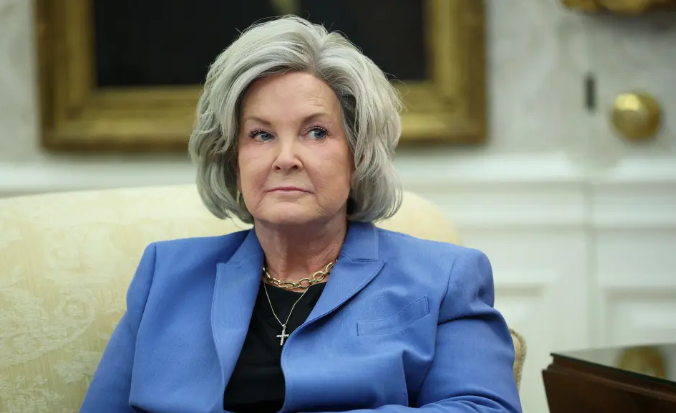
Susie Wiles Reveals Brutal Toll of Fighting Cancer While Running Trump’s White House
White House Chief of Staff Susie Wiles has opened up about the difficult reality of battling breast cancer while continuing to oversee President Trump’s White House, revealing that treatment took a serious toll on her physically and mentally.
Wiles was diagnosed with early-stage breast cancer in March and continued working while undergoing six months of treatment. In a personal essay published Sunday, she described cancer as something that occupied her thoughts from the moment she woke up and sometimes followed her into her sleep.
Some days, Wiles said, simply getting out of bed, getting dressed and going to work required enormous effort. Other days were consumed by treatment and the uncertainty surrounding medical tests, appointments and what might come next.
Despite the challenges, Wiles continued serving as President Trump’s chief of staff throughout her treatment. She said her work provided a sense of purpose outside of cancer and helped prevent the disease from completely taking over her life.
Chemotherapy affected her stamina, mobility and sometimes her ability to focus. Wiles acknowledged that she could not always be everywhere she wanted to be, forcing colleagues inside and outside the White House to step in and help when necessary.
Her family also played an important role throughout the ordeal. Wiles credited her two daughters, extended family, friends, medical team and colleagues with helping her continue through months of treatment while she remained responsible for running the White House staff.
President Trump publicly supported Wiles after her diagnosis was disclosed in March, describing her as a fighter and saying her prognosis was excellent. Wiles has since thanked the president for what she called his unwavering support throughout her battle.
Earlier this month, Wiles traveled to the Mayo Clinic for a medical procedure connected to her breast cancer treatment. Pathology results later came back clear, and on September 16 she announced that she was cancer-free.
Wiles said successful surgery found no residual cancer, but she now faces the process of rebuilding the strength and stamina that treatment took from her. She also emphasized that continuing to work through cancer treatment is not possible or appropriate for everyone.
The experience has left Wiles with a deeper appreciation for her life and the people around her. She said she decided to publicly share her story in hopes that it could provide encouragement to others still fighting the disease, while making clear that cancer did not take away her identity or her commitment to her work.