
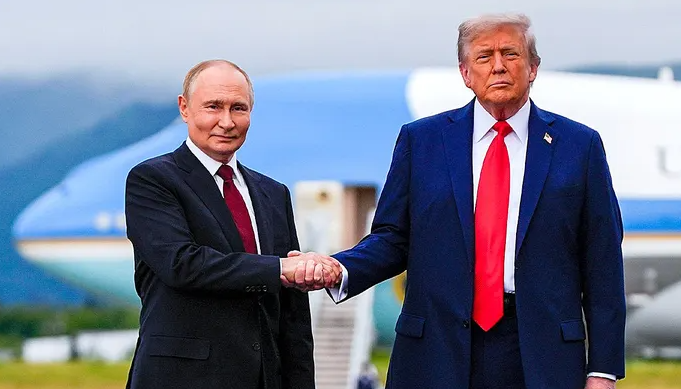
Trump Announces Major Diesel Fuel Deal With Putin to Bring Down Soaring American Energy Prices
President Trump announced Friday that he reached an agreement with Russian President Vladimir Putin to deliver millions of tons of diesel fuel to the United States and global markets, a move intended to combat soaring energy prices that have placed growing financial pressure on American farmers, truckers and businesses.
The agreement follows a direct conversation between the two leaders and represents a significant change in American energy policy toward Russia. Trump said the arrangement would immediately increase global diesel supplies, with additional shipments scheduled over the coming months.
Under the agreement, Russia will immediately release more than 300,000 tons of diesel fuel to American and international markets. Another 500,000 tons are expected in November, followed by an additional 1 million tons shortly afterward.
Trump also announced that Russia intends to supply another 3 million tons of diesel within a relatively short period, depending on the condition of the country’s oil refineries. Those facilities have suffered extensive damage from Ukrainian drone attacks during the ongoing war.
The president described his conversation with Putin as highly successful and emphasized that reducing fuel costs remains a central priority of his administration. He specifically highlighted the impact of expensive diesel on agriculture, ranching and the trucking industry.
Diesel prices have climbed sharply amid disruptions to global energy markets caused by the conflict involving Iran. The national average reached approximately $6.28 per gallon this week, creating additional expenses for businesses that depend on diesel-powered equipment and transportation.
Unlike gasoline, diesel plays a particularly important role in moving commercial goods across the country. Higher diesel prices increase operating costs for trucking companies, farmers, construction businesses and manufacturers, potentially contributing to higher consumer prices.
The Trump administration hopes that bringing additional Russian fuel into international markets will help relieve supply shortages and reduce pressure on prices. However, energy analysts have cautioned that the immediate impact remains uncertain because the proposed shipments represent a relatively small portion of global demand.
To facilitate the agreement, the Treasury Department issued a temporary general license permitting transactions involving Russian diesel that would otherwise face American sanctions. The authorization extends through April 7, 2027, allowing eligible shipments to proceed despite existing restrictions on Russian energy trade.
The decision marks a notable departure from previous American efforts to restrict Moscow’s energy revenues following its invasion of Ukraine. Washington has maintained extensive sanctions against Russian oil companies and financial institutions as part of its broader strategy to pressure Putin over the conflict.
Trump signed additional Russia sanctions legislation in September, including measures targeting Russian energy exports and countries purchasing Russian fuel. The new diesel arrangement introduces an exception to that broader pressure campaign as the administration prioritizes stabilizing energy supplies.
Ukrainian President Volodymyr Zelensky strongly criticized the announcement, arguing that allowing Russia to sell additional petroleum products would provide Moscow with revenue that could support its military operations.
Zelensky described the decision as a sign of weakness and warned that easing restrictions on Russian energy exports could undermine international efforts to bring the war to an end. He also accused the United States of giving Putin an economic advantage while Ukraine continues defending itself against Russian attacks.
Trump rejected the suggestion that the agreement reflected weakness, emphasizing that securing sufficient energy supplies was necessary for the United States and the broader international economy. The president thanked Putin for cooperating on the arrangement and reiterated his expectation that increased supplies would help lower prices.
Russian officials welcomed the announcement. Kirill Dmitriev, a senior envoy representing Putin, praised renewed energy cooperation between Washington and Moscow, arguing that the agreement could benefit international markets.
The Kremlin also confirmed that Putin had expressed Russia’s willingness to supply oil and petroleum products to American and global markets. Russian officials indicated that restrictions on diesel exports could begin easing as Moscow prepares to fulfill the new commitments.
The announcement comes less than a month before the November 3 midterm elections, with energy affordability emerging as a significant economic concern. Elevated diesel and gasoline prices have increased pressure on the administration to identify additional sources of supply.
Trump has also been considering other measures to expand domestic energy production and refining capacity. Administration officials have explored using federal authorities to accelerate infrastructure improvements and increase American fuel output.
Despite the announcement, several questions remain unanswered, including the precise delivery schedule, commercial arrangements and the amount of Russian diesel that will ultimately reach American buyers rather than other international markets.
The agreement nevertheless represents one of the administration’s most significant recent efforts to address rising fuel costs through international negotiations. Trump is betting that expanding access to available energy supplies, including Russian diesel, will help ease economic pressure on American consumers and businesses while the administration pursues longer-term domestic production measures.