
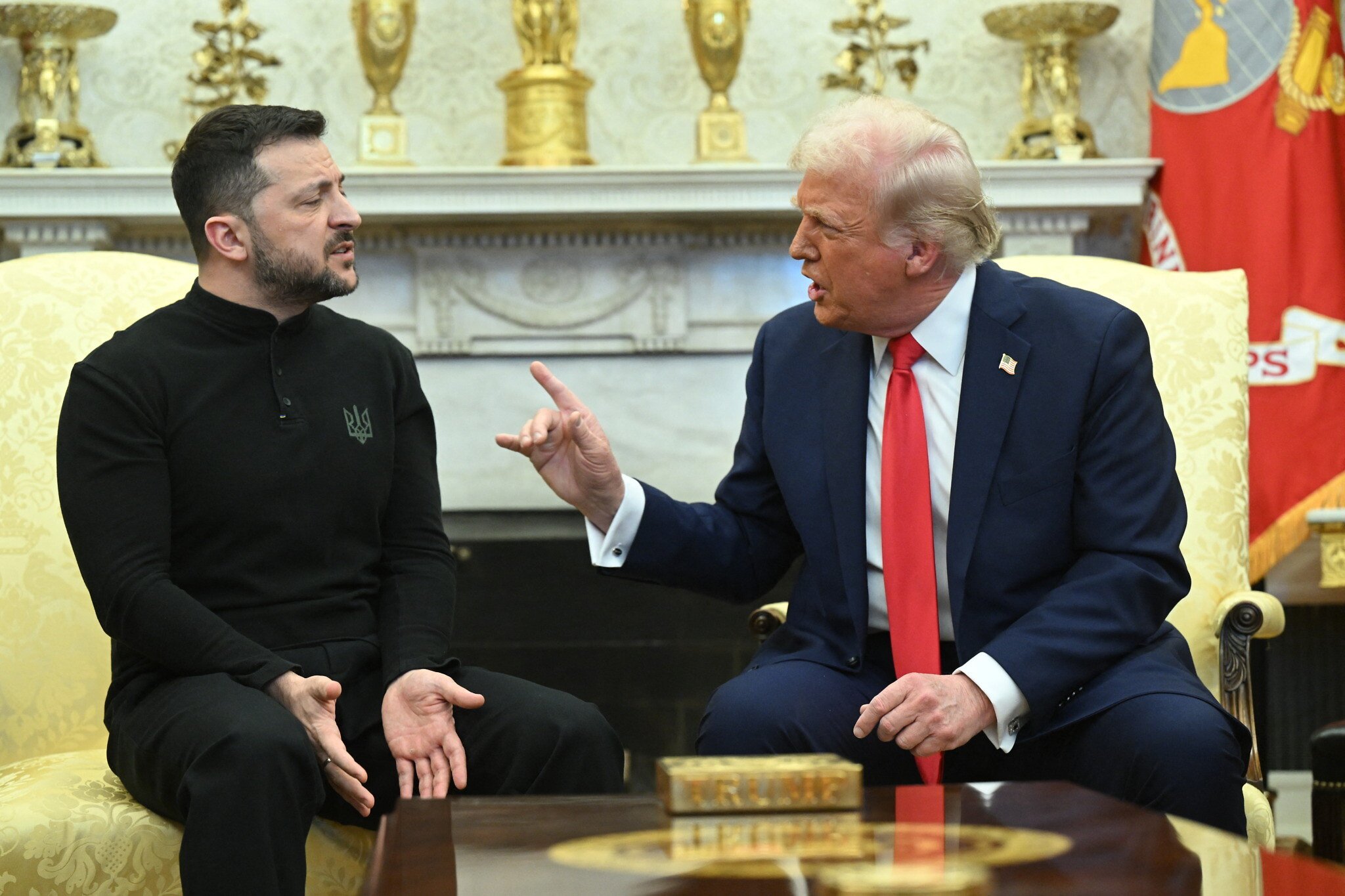
Trump Calls for Ukraine to Replace Zelensky, Accuses Him of Refusing Peace Deals and Driving Up Global Fuel Prices
President Trump called for Ukrainian President Volodymyr Zelensky to be replaced Saturday, accusing the Ukrainian leader of repeatedly rejecting opportunities to end the war with Russia while continuing military attacks that have disrupted global energy supplies and contributed to rising diesel prices.
Speaking with reporters outside the White House before departing for a political rally in Tennessee, Trump delivered some of his strongest criticism of Zelensky in months. The president argued that Ukraine needs new leadership willing to negotiate an agreement with Russia and bring the devastating conflict to an end.
Trump accused Zelensky of passing up numerous opportunities to reach a settlement with Russian President Vladimir Putin. He expressed frustration that the fighting has continued for more than four years despite repeated diplomatic efforts by the United States and other international partners.
The president specifically called for Ukraine to select a leader capable of negotiating a peace agreement. He argued that Zelensky has repeatedly demonstrated an unwillingness to accept terms that could bring the war to a conclusion.
Trump also pointed to the enormous human and territorial losses suffered during the conflict, which began when Russia launched its full-scale invasion of Ukraine in February 2022. He claimed that Ukraine had lost approximately 30% of its territory and that the fighting had resulted in millions of deaths, although those figures exceed several independent estimates.
The president reiterated his longstanding position that the war could have been prevented through different American leadership. He argued that the conflict should never have started and expressed frustration that diplomatic efforts have failed to produce a lasting settlement.
Much of Trump’s criticism centered on Ukraine’s continued attacks against Russian oil refineries. The president said he had personally warned Zelensky to stop targeting those facilities because of their importance to international energy markets.
Trump maintained that Ukraine could pursue other military targets without disrupting petroleum production and refining operations. He accused Zelensky of ignoring those warnings and contributing to fuel shortages affecting countries far beyond the battlefield.
The president specifically highlighted the financial consequences for American farmers, ranchers and trucking companies. Diesel prices have climbed above $6 per gallon nationally, increasing transportation and agricultural expenses while placing additional pressure on American consumers.
Trump argued that Russian petroleum supplies remain important to the global energy market, particularly as international conflicts have disrupted production and shipping. He said attacks against Russian refineries create additional uncertainty and make it more difficult to stabilize prices.
His comments came one day after announcing a major agreement with Putin to increase Russian diesel supplies to the United States and international markets. The arrangement includes an initial release of more than 300,000 metric tons of diesel, followed by additional shipments over the coming months.
Under the agreement, Russia is expected to supply another 500,000 tons in November and 1 million tons shortly afterward. Trump also announced plans for an additional 3 million tons, depending on the condition and operating capacity of Russian refining facilities.
The Treasury Department temporarily eased certain sanctions on Russian energy transactions to facilitate the arrangement. The administration maintains that increasing available diesel supplies could help reduce costs for American businesses and households.
The decision represents a significant shift in Washington’s approach to Russian energy exports. The United States has previously used sanctions to restrict Moscow’s petroleum revenues as part of its broader effort to pressure Russia over the invasion of Ukraine.
Zelensky strongly condemned the agreement, arguing that allowing Russia to increase fuel sales would provide additional revenue for its military operations. He accused Washington of weakening economic pressure on Putin at a time when Russian forces continue launching deadly attacks against Ukrainian cities.
The Ukrainian president’s criticism intensified following another wave of Russian airstrikes Saturday. Attacks in the Zaporizhzhia region killed civilians, including children, and damaged residential buildings, according to Ukrainian officials.
Zelensky argued that Russia interprets any reduction in economic pressure as an opportunity to continue its military campaign. He warned that easing restrictions on Russian petroleum exports could encourage additional attacks rather than advance negotiations.
The dispute has also exposed disagreements among Republicans over the administration’s energy agreement with Moscow. Rep. Michael McCaul of Texas expressed concern that allowing additional Russian oil revenues could strengthen the Kremlin’s ability to finance the war.
Other Republican figures, including former Vice President Mike Pence, have criticized the decision to relax sanctions while Russia continues attacking Ukrainian territory. They argue that maintaining economic pressure is necessary to encourage Putin to negotiate seriously.
White House Press Secretary Katie Zacharia defended the administration’s approach, emphasizing that Trump is responding to Americans frustrated by rising fuel and grocery prices. She described the energy agreement as a practical effort to increase supplies and address immediate economic concerns.
The confrontation comes as American, Ukrainian and European negotiators continue discussing possible terms for ending the conflict. Representatives recently met in Miami to develop a proposal that could provide a framework for renewed negotiations with Moscow.
Those discussions remain complicated by major disagreements over territory, security guarantees and the future of Russian-occupied regions of Ukraine. Moscow continues demanding concessions that Kyiv has resisted, while Ukrainian officials insist that any agreement must protect the country’s sovereignty.
Ukraine’s foreign minister, Andrii Sybiha, defended Zelensky following Trump’s remarks, arguing that the Ukrainian people have the right to determine their own political leadership. He emphasized that Zelensky is leading the country during an ongoing war and should not face demands for replacement from foreign governments.
Trump’s latest statements underscore the growing tensions between Washington and Kyiv over both peace negotiations and energy policy. The president is increasingly linking the war’s continuation to economic pressures facing American families, particularly those dependent on diesel fuel.
With the November midterm elections approaching, the administration is under pressure to address rising energy costs while pursuing a diplomatic resolution to the conflict. Trump has made clear that he expects Ukraine to reconsider its approach to negotiations and stop attacking Russian oil infrastructure.
The dispute leaves the relationship between Trump and Zelensky facing another significant test. While the White House continues pursuing negotiations, the president’s public call for new Ukrainian leadership represents a sharp escalation in his criticism of Kyiv’s handling of the war.