
Trump Says Iran Agrees To Nuclear Concessions As Peace Deal Nears
President Donald Trump said Thursday that the United States is closing in on a potential peace agreement with Iran, claiming Tehran has agreed to key demands — including abandoning any pursuit of a nuclear weapon.
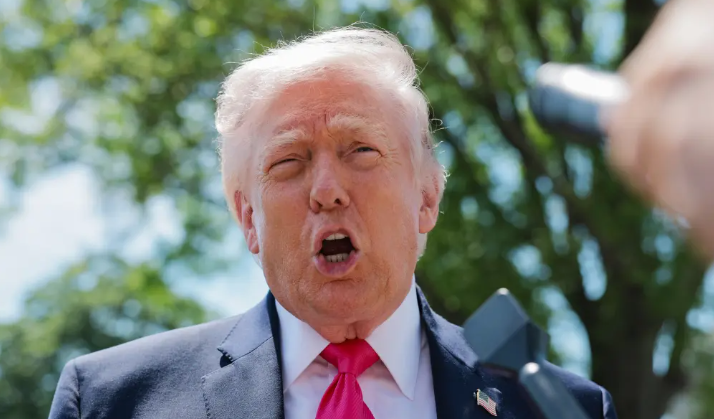
Speaking to reporters before departing the White House, Trump said Iran had “agreed very powerfully” not to develop nuclear weapons, describing the development as a major breakthrough after weeks of conflict and stalled negotiations.
He also asserted that Iran has agreed to hand over what he described as “nuclear dust,” referring to enriched uranium believed to be buried deep underground at nuclear sites damaged during U.S. strikes earlier in the conflict. Those sites were targeted in part by B-2 bomber missions, which the administration says significantly degraded Iran’s nuclear capabilities.
Trump suggested momentum is building toward a final deal, adding that negotiations could move quickly and potentially be finalized in the coming days. He even floated the possibility of traveling to Pakistan himself, where talks are being mediated, to help close the agreement.
Pakistan has taken on a central diplomatic role, with Prime Minister Shehbaz Sharif and military officials engaging in shuttle diplomacy across the region to bring both sides closer to a resolution.
The latest developments come after an earlier round of negotiations in Islamabad, led by Vice President JD Vance, failed to produce a deal despite more than 20 hours of talks.
Meanwhile, economic pressure has intensified on both sides. The U.S. recently imposed a military blockade on the Strait of Hormuz, a critical global shipping route that handles a significant portion of the world’s oil supply. The move was aimed at forcing Iran back to the negotiating table, but it has also driven up global energy prices and strained markets.
Trump argued that a finalized agreement would stabilize the situation, predicting lower oil and gas prices and the reopening of the vital shipping lane. He described the potential outcome as delivering “free oil and free Hormuz Strait,” signaling a return to normal global energy flows.
The president also left open the possibility of extending the current ceasefire, which is set to expire April 22, as negotiations continue.